How to be Confident

How to be Confident

How To Be Confident

Losing your confidence is something that many can’t grasp if they’ve never lost it. But it can and will affect nearly every one of us in one way or another. When we lose confidence in one area of our life, it affects our confidence in other areas.

How We Lose Confidence

Losing your confidence doesn’t necessarily come from having an incident in the saddle. It can occur when we have had a period out of the saddle, feedback from an instructor or individual, overhearing someone negatively talk about us, going through personal challenges and even suffering a fall at home or recovering from an illness or surgery.

As we get older, we are more likely to lose our confidence as we start to notice the signs of aging such as your hair going grey, getting wrinkles, hormone levels starting to diminish and play havoc with your moods, your outlook on life and maintain or losing weight becomes a battle. We also start to notice the things we could once do with great ease are no longer so easy.

All and any of these things affect our confidence.

When you lose your confidence, you become self critical and conscious of yourself. The way you move, feel, ride and look.

Whilst you may appear to be happy and content on the outside. The truth is. You’re not happy. You can be angry, frustrated, overwhelmed, sad and unsure of how to move forward.

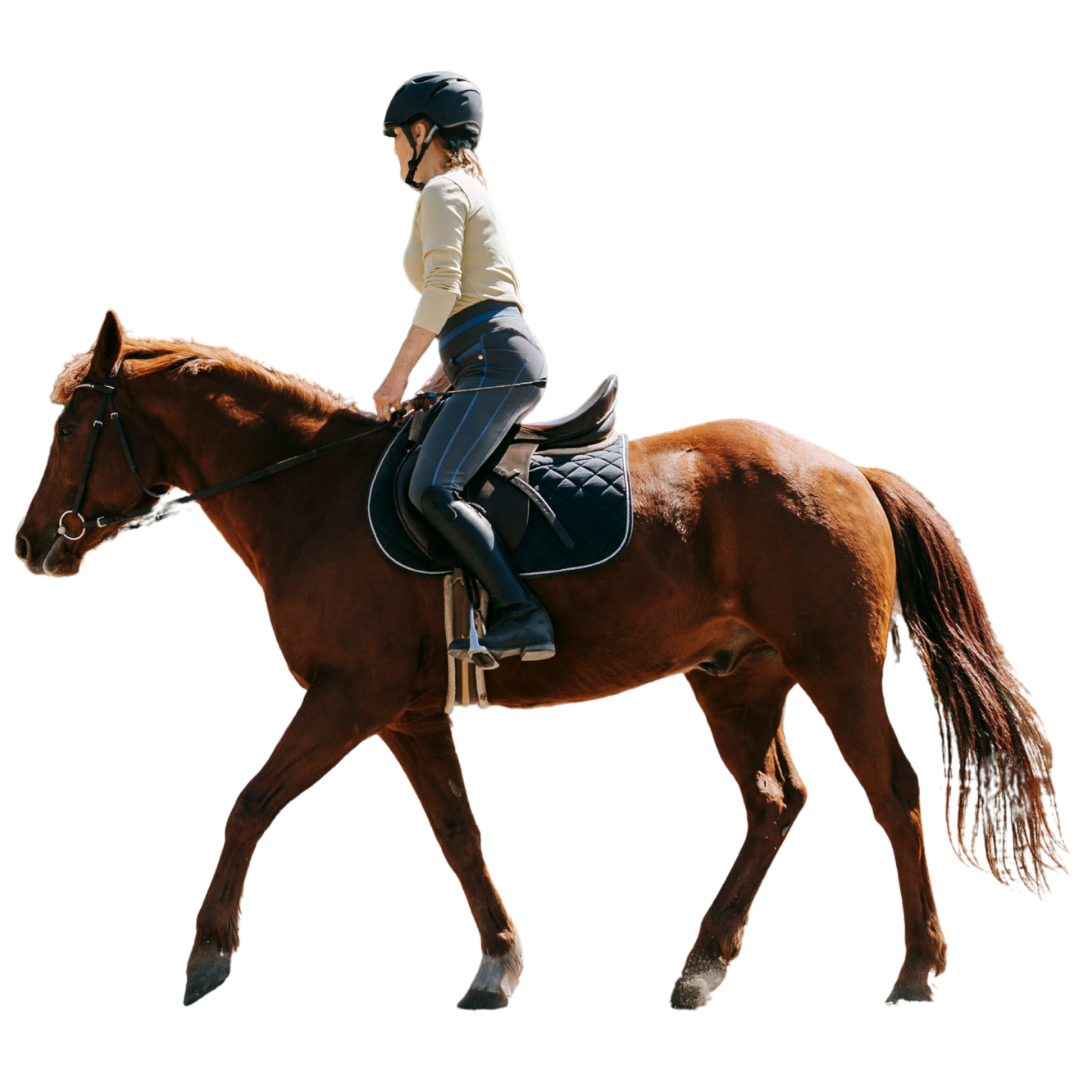
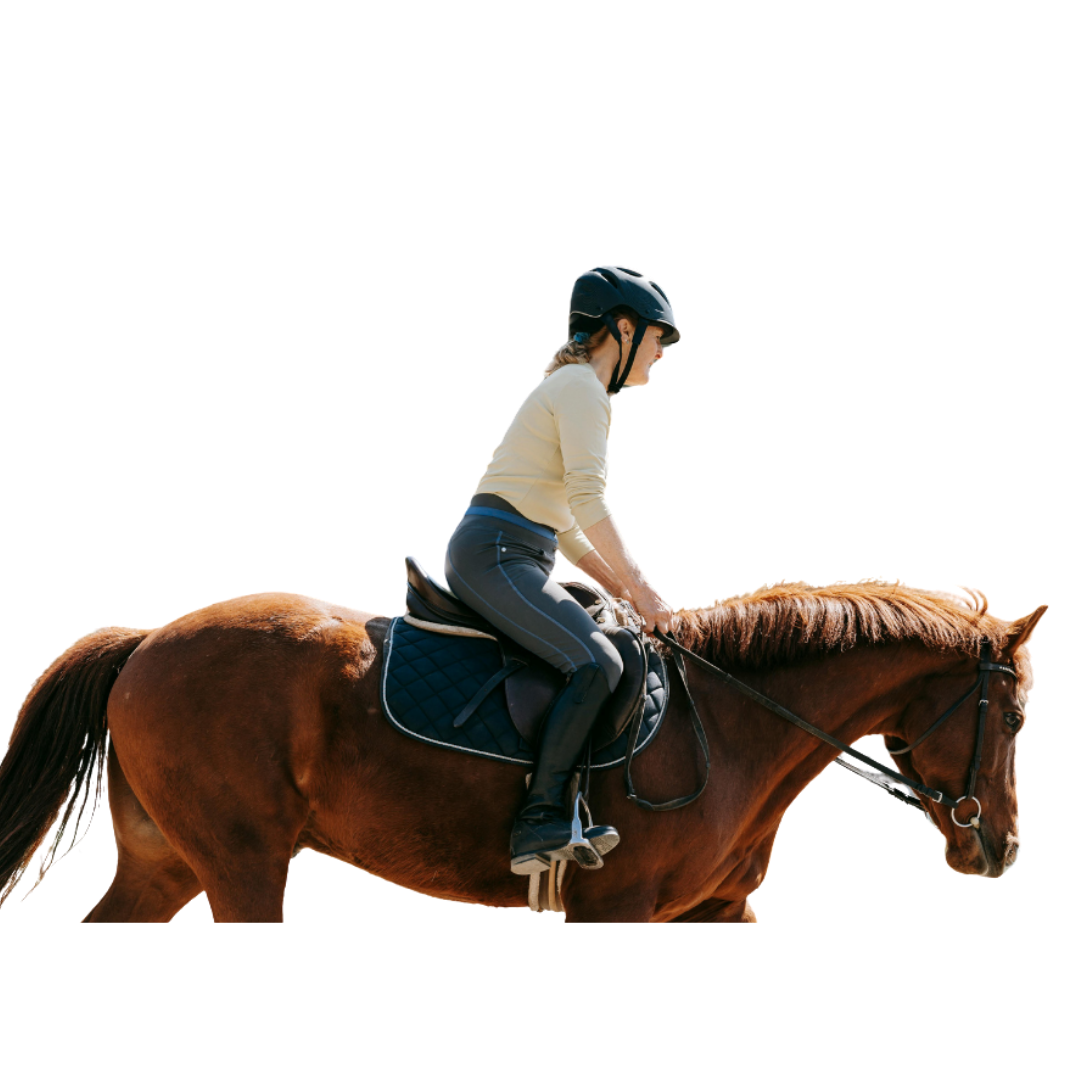
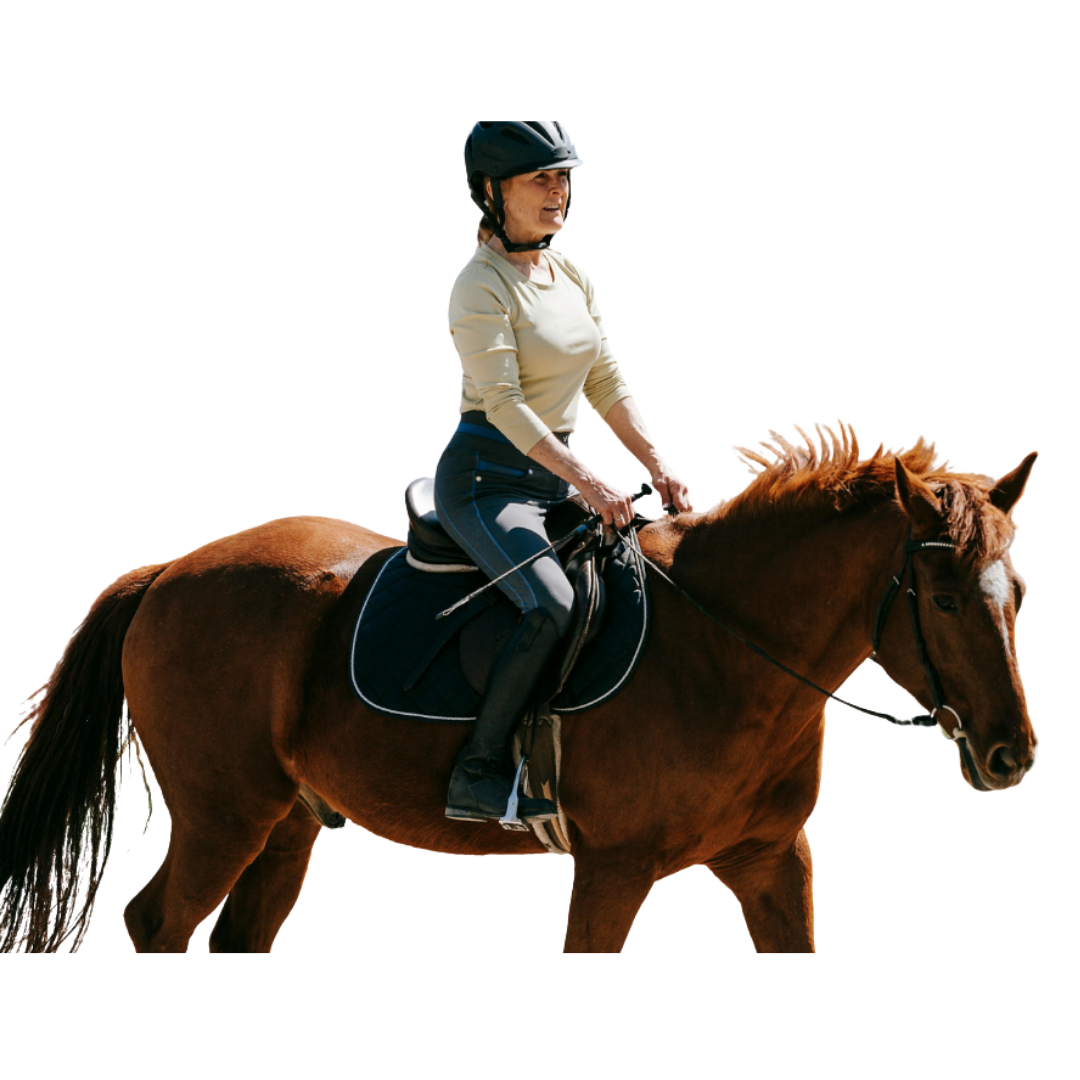
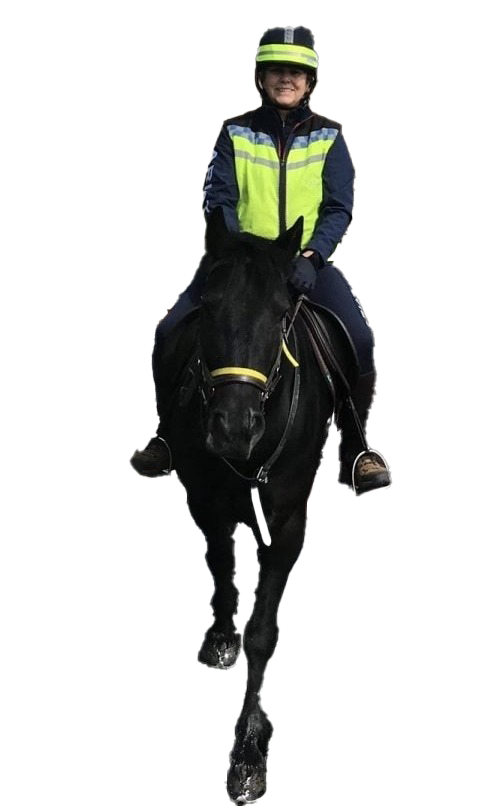
Helen loves her Fell pony Wally, he is her retirement plan! They are going to spend all their time exploring the Yorkshire Dales together. Doing exciting things with friends and going to clinics and shows.

And they did, till Helen fell down the stairs at home and lost all belief in herself as she struggled to function day-to-day as she was recovering. Simple tasks like doing the washing, lifting items and cleaning the house was difficult. Not being able to do these simple tasks had a huge effect on Helen.

Helen couldn’t contemplate getting in the saddle, she couldn’t even bring herself to just go and enjoy being with him.

Hele - Fast-Track Intensive Equestrian Coaching

Read Helen’s Full Story 👉 HERE

Losing your confidence makes you unhappy. And not being happy limits your enjoyment of your horse, your riding and your life.

Regaining Your Confidence

  • NYou Need to Have a Plan

Seems simple but it’s incredibly challenging when you are not sure where to start or what to do. Having a plan, support and guidance and being realistic in the time it will take is key.

Whatever you decide to do, whether it be to have coaching sessions, join a program or set yourself small manageable tasks. You must understand that it will take a minimum of 6 months to make real progress or you risk being back at square one.

You should decide what you are going to do, how frequently you are going to do it and how long you will do it for. During that time, don’t change the approach. Stick with it. Give it time to work.

Examples: Hypnotherapy, NLP Sessions, Menopause Coaching, Going to the Gym/Class, Rehab Sessions with a Trainer, Having riding lessons on a school master, Join a Transformation program or simply setting yourself little tasks each week.

  • NYou Need and Deserve to Have Support

Many of us feel that we don’t need help or are embarrassed to ask for help but there will be times when it feels like the world is against you and you feel low. Not having someone to listen and guide you is setting yourself up for failure.

You will naturally think negatively of the progress you are making, instead of remembering and celebrating all the wins.

Having support not only keeps you on plan and moving forward. It helps guide you, pick you up when you need it, drive you forward when you want to quit, and remind you just how far you’ve come.

  • NTransformations Take Time

It takes time to gain confidence back, acknowledge that. It’s not going to be a week or a month. But if you are consistent and keep moving forward you will become the confident rider you want to be. You will find joy in being with and riding your horse.

You will have a more positive outlook on life.

You will be happy in your skin and learn to make the most of every opportunity that comes your way.

Whilst Helen didn’t lose her confidence riding, it affected her confidence to ride and handle Wally.

Having been in a similar position before, Helen knew that to move forward she had to improve her daily function. She needed to build up her strength and improve her mobility so that every day tasks weren’t so difficult. This would make her believe in herself again. That she could overcome her injury, she was strong, physically and mentally and She could cope if Wally was a little overwhelming on a particular day.

Helen signed up for the Strong Confident Rider Program in 2022 with the goals of:

I want to be a calm, capable and focused rider. I want to be courageous and responsive rather than timid and reactive.

  • Change the pictures and narrative in my head!
  • I want my body to feel strong and confident
  • I want to develop a heartfelt connection with Wally, to ride with an awareness of how I’m using my body and how this affects Wally.
  • I’d like to be able to think something and Wally would respond with minimal aids.

Helen smashed her goals within months of joining and has continued on to the SCR membership program where she is living her best life with Wally.

    “I can’t quite believe just how much has changed over the last 12 months.

    I’ve gone from dithering on the mounting block to planning my next adventures with my beloved Fell Pony, Wally.

    I think he’s as happy as I am.”

    Helen

    Fell Lover and Countryside Explorer

    Take Action

    The most important step you can do right now is to take action. Life is too short to ‘do it tomorrow’. If you had done it yesterday, you’d be one step closer to becoming more confident. Taking action doesn’t need to be overwhelming.

    Simply take the time today to decide the first step in your plan. How do you want to work on your confidence?

    • If it’s the riding aspect, are you going to book some lessons with a schoolmaster?
    • If it’s more about changing the way you view yourself, are you going to work with a confidence coach or have Hypnotherapy/NLP sessions?
    • If is improving your mindset, health, well-being and riding, a Bespoke Program is the way forward. (The Strong Confident Program is not currently running).

    Whatever route is right for you.

    Don’t waste any more time worrying.

    Take action today and be one step closer.

    Just imagine where you could be in 6 months time.

    Running for Rider Fitness

    Running for Rider Fitness

    Running for Rider Fitness

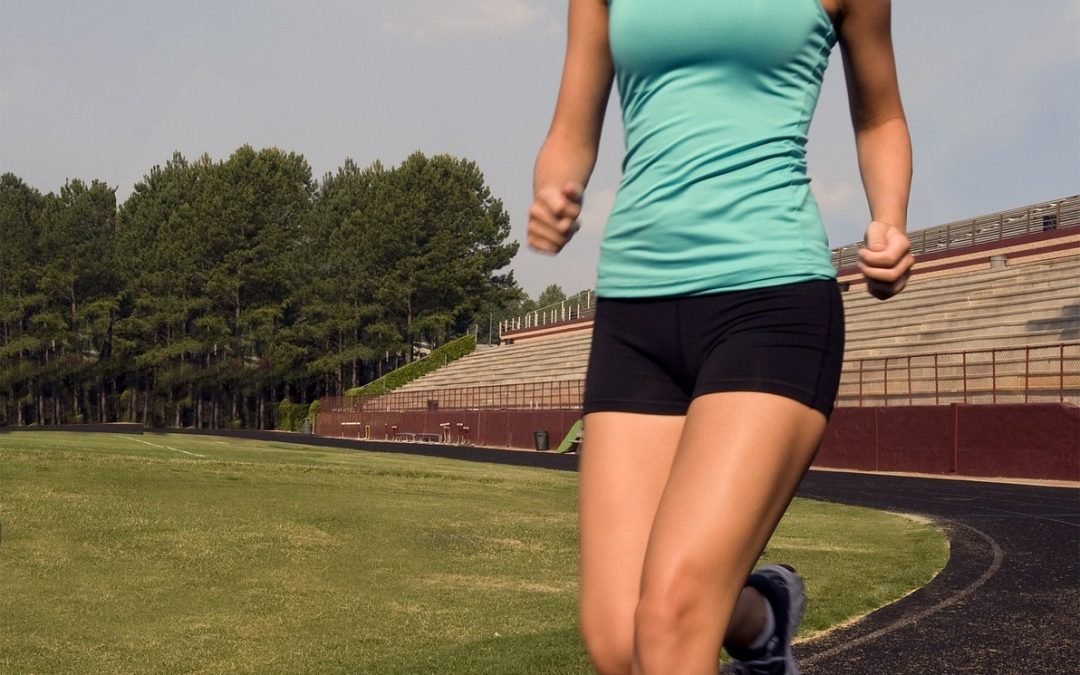
    Running is a great way to improve cardiovascular fitness and increase lean muscle mass. It is also Free!! You get to see areas from a different view, challenge yourself with different terrain, and get high on endorphins!

    For many, the feeling of being cardiovascularly challenged is the definition of fitness. If they are not sweaty, aching, and/or unable to continue. They have not worked hard enough.

    The sense of achievement and satisfaction, the endorphins, when you have run as much as you can physically endure is highly addictive.

    What benefits does Running provide Riders?

    Running is an excellent way to improve your cardio fitness (cardiorespiratory fitness (CRF)) – Your ability to uptake and supply oxygen to skeletal muscle mitochondria for energy production. When oxygen is used for energy production it is known as aerobic exercise.

    Anaerobic exercise means that the body uses different systems to produce energy. In the absence of oxygen.

    Cardio fitness is expressed as your VO2 Max – The maximum volume of oxygen you can take in through your lungs, pump around your body using your heart and blood vessels and then make use of the oxygen in your muscle’s energy expenditure.

    In addition, running can help develop lean body mass but this is highly dependent on whether you are fuelling your body correctly for muscle growth.

    Running for Rider Fitness

    Running improves your cardiovascular fitness. Improving your body’s ability to uptake and utilise oxygen for energy production.

    Why is Cardio Fitness Important for Riders?

    A normal heart rate at rest can vary between 60-100 beats per minute. The ‘ideal’ range is 50-70 beats per minute. The lower the resting rate, the fitter you are, and the less stress on your heart to pump blood around your body.

    Event Fit

    A normal heart rate at rest can vary between 60-100 beats per minute. The ‘ideal’ range is 50-70 beats per minute. The lower the resting rate, the fitter you are, and the less stress on your heart to pump blood around your body.

    When riding your heart rate will be higher than its resting rate. Mainly because you are actively using your body to ride but also because of stress, anxiety, and excitement.

    If you have a low level of cardio fitness, this puts excess stress on your heart and can leave you feeling weak, dizzy, or sick.

    In worst-case scenarios, it can also lead to stroke and heart attacks.

    Because your heart rate will fluctuate when riding, depending on what you are doing, how your horse is feeling beneath you, how you are feeling, and of course how fit you are.

    Cardio fitness is an essential component of Rider Fitness but not classed as Rider Fitness.

    Running Considerations


    Whilst running itself is not harmful to the body. The way in which you run can be.

    Your running technique will be influenced by your level of fitness and your posture.


    Is Running good for Rider Fitness
    • If your posture is compromised it affects your body’s ability to run efficiently and absorb impact which can lead to injuries.
    • If your fitness level is low then you will be training anaerobically which can lead to lactic acid build-up (heavy legs / burning sensation) which in turn affects your body’s ability to run with good technique.

    If you have a compromised posture you would be best advised to correct your posture first through corrective exercises (where possible) so that your body is able to deal with the impact effectively, reducing the risk of injuries and the damage to joints that can occur.

    Postural imbalances such as a Kyphotoic posture where your upper body is rounded and you will probably have a posterior pelvic tilt (bottom tucked under) can be made worse by performing exercise activities such as running, rowing or cycling.

    This is because the muscles that you should be using to perform these activities will be shortened/tight:

    • Hamstrings
    • Abdominals
    • Glutes
    Posterior Pelvic Tilt

    This will inhibit their ability to function correctly because these activities typically force you into a crouched/rounded position (running because it’s hard and how the majority of runners run). It further shortens those muscles and contributes to the weakness of your hip flexors and lower back

    If you have a low level of fitness, start gradually by walking with small intervals of jogging. There are many running programs available on the internet for beginners. Take your time and build up your fitness slowly.


    Running Technique

    • Posture: Ensure that your posture is in the best alignment possible before starting running.
    • Function: It is important that you run by pushing yourself forward by using your glute (bum), not dragging yourself forward. Using the incorrect muscles will cause fatigue quicker and also alter your body’s running posture which will reduce its ability to absorb shock.

    Watch this short video to see the differences between incorrect and correct running technique.

    Note: Sally has good posture and runs regularly and is coached in her technique. It is very difficult to run incorrectly when you have learned to run correctly. This means this video will not show the true extent of running incorrectly. It will be much worse.

    Summary

    Once you have gotten past the hardship of learning to run correctly and have built up a good level of cardiovascular fitness. Running is enjoyable and delivers high amounts of endorphins.

    It is satisfying and rewarding and improves heart and lung function. Best of all, it’s free and you can explore your area and participate in local running groups and take part in a variety of running competitions.

    But it’s not for everyone. Riders with a compromised posture are best seeking other activities to boost their cardiovascular ability. Once which doesn’t put them at risk of injury. Activities such as walking, swimming, and using a cross trainer. Cycling and rowing are also options if you don’t have a kyphotic or posterior pelvic tilt.

    Running can improve muscular endurance if you run long distances and can improve lean muscle development if you are eating for performance.

    • Muscular endurance and lean muscle development are not typically achievable or considered a benefit of running to the average runner. This is due to many running short distances and normally in a calorie deficit.
    • If you run as a sports activity. You will be combining your running with sprints, hill work and resistance training in order to enhance your muscular endurance and lean muscle.

    Running is a beneficial form of cardio exercise for riders but running doesn’t make you rider fit. There are 7 more components that make up rider fitness: Balance, Coordination, Stability, Agility, Mobility,  Muscular Strength and Muscular Endurance.

    Rider Biomechanics

    Rider Biomechanics

    What is Rider Biomechanics

    Rider biomechanics refers to the study of how a rider’s body movements, positioning, and muscle activity affect their riding performance, comfort, and safety. It encompasses the analysis of various factors such as balance, posture, and the interaction between the rider and the horse.

    Rider biomechanics is important in equestrian sports, where small changes in the rider’s position or muscle activity can have a significant impact on the horse’s movement and performance. By understanding the principles of rider biomechanics, riders can improve their riding technique, reduce the risk of injury, and enhance their overall riding experience.

    In addition, rider biomechanics can also be used to evaluate and select appropriate equipment, such as saddles, stirrups, and reins, to optimize the rider’s position and comfort while riding.

    What does Rider Biomechanics Assess?

    When assessing rider biomechanics, several factors are typically considered, including: 

    • NAlignment and posture:

    This refers to the rider’s ability to maintain a neutral spine and aligned body position, which helps distribute their weight evenly across the horse’s back and allows for clear communication between the rider and the horse.

    • NBalance:

    Good balance is essential for effective riding. It involves the rider’s ability to maintain their center of gravity over the horse’s center of gravity, which is important for staying in control of the horse’s movements.

    • NJoint Angles:

    Proper joint angles, such as hip, knee, and ankle flexion, can improve the rider’s stability and balance, while also allowing them to move with the horse’s motion.

    • NMuscle Activation:

    The rider’s muscle activation patterns can affect their balance and stability, as well as their ability to influence the horse’s movement.

    • NRein Contact:

    The way the rider holds the reins and applies pressure can impact the horse’s response to their cues.

    • NMovement:

    The way the rider moves with the horse, such as their ability to absorb and follow the horse’s motion, can affect the horse’s comfort and overall performance


    Rider Biomechanics

    By assessing these factors, riders can identify areas where they may need to improve their technique and develop a more effective, efficient, and comfortable riding style.

    Considerations of Assessments

    It is important that any rider biomechanics assessment takes into account learned behavior, habits, and body responses that come from riding experience, as well as any injuries or traumas that a rider may have experienced.


    Event Rider

    These factors can play an important role in shaping a rider’s biomechanics.

    For example, a rider who has experienced a fall or riding trauma may have developed habits or muscle activation patterns that are designed to protect them from future injury. These patterns may not be optimal for riding performance, but they can be difficult to overcome without the help of an experienced coach who understands the rider’s history and needs. Similarly, a rider who has developed a habit of leaning too far forward or gripping too tightly with their legs may need to retrain their muscles in order to achieve a more balanced and effective riding position.

    Pros & Cons

    Pros:

    • Improved riding performance: By optimizing rider biomechanics, riders can improve their balance, stability, and overall riding technique, leading to better performance in the arena or out and about.
    • Reduced risk of injury: Proper biomechanics can help riders avoid injuries such as falls, muscle strains, and joint pain, by distributing forces and stress evenly throughout the body.
    • Enhanced horse welfare: Optimal rider biomechanics can also benefit the horse by reducing interference with the horse’s movement and allowing the horse to move more freely and comfortably under saddle.
    • Improved communication between horse and rider: Good biomechanics can help the rider communicate more effectively with the horse, by using clear and subtle cues that are easy for the horse to understand.
    • Increased rider confidence: By improving their technique and reducing the risk of injury, riders may feel more confident and comfortable in the saddle.

    Cons:

    • Focus on form over function: Some riders may become overly focused on achieving a “perfect” position or technique, to the point where they force their bodies into positions they are not designed or conditioned to perform. A riders ‘perfect’ position is individual. Where their skeletal structure may mean it is not possible for them to obtain the ear, shoulder, elbow, hip, heel alignement.
    • Potential for injury from over-correction: In some cases, riders may overcorrect their biomechanics in response to coaching or training, leading to new injuries or imbalances. As above, the ‘perfect’ alignment is not possible for some riders. This should be recognised and advised by coaches.
    • Overemphasis on individual technique: While rider biomechanics can be an important factor in riding performance, it should not be seen as the only or most important aspect of riding. Factors such as horse training, rider conditioning, and nutrition can also play a significant role in achieving success in the saddle.
    • Time and resource-intensive: Coaching or training for rider biomechanics can be time-consuming and require riders to understand that correction is a process.

    Taking Action

    Following a Rider Biomechanics assessment you will need to work on yourself off the horse to improve upon the areas identified by your Biomechanics Coach.

    Rider Fitness Made Easy

    Whilst you can improve upon the identified areas in the saddle it is important to understand that your body is used to a particular way of functioning in the saddle. It has created muscular memory, recruitment and activation pathways that cannot simply be undone by adjusting your posture and function in a session. It takes time.

    Research shows that improving functional movement on the ground can lead to improvements in functional movement on the horse. Developing proper functional movement patterns, such as good posture, core stability, and balanced weight distribution, can help riders maintain a stable and effective position in the saddle, which can in turn enhance their ability to communicate with the horse and improve overall riding performance.

    Summary

    Overall, rider biomechanics is a complex and dynamic field that takes into account the individuals skeletal structure, needs and experiences of each rider, as well as the unique characteristics of the horse they are riding. The key to improving the your riding biomechanics is working with a knowledgeable instructor or coach. And understanding that is is a process. Results are not achieve overnight but the benefits are improved technique, reduction in the risk of injury, and enhance yours and your horses overall riding experience.

    Improving functional movement on the ground can have a positive impact on riding performance, by enhancing core stability, balance, and overall fitness. It allows you to focus solely on yourself without having to worry about a negative impact on the horse as you learn, develop and adapt.

    Other key points to remember is that riding is a unique and complex activity that involves many different factors beyond just functional movement, including horse training, communication, and tactical decision-making, that also play a significant role in achieving success in the saddle.

    References:

    • A study published in the Journal of Equine Veterinary Science in 2016 found that riders who participated in a six-week core stabilization program experienced significant improvements in riding performance, including increased stability in the saddle, improved leg position, and better overall balance.
    • Another study published in the Journal of Equine Science in 2017 found that riders who engaged in Pilates training had significant improvements in their riding posture, including better alignment of the pelvis and spine.
    • A review of the literature published in the Journal of Equine Veterinary Science in 2020 found that strength training and core stabilization exercises can have a positive impact on riding performance by improving riders’ ability to maintain a stable and effective position in the saddle.

    How Pelvic Tilts affect your Riding

    How Pelvic Tilts affect your Riding

    Bad posture is the most common reason for an Anterior or Posterior Pelvic Tilt.

    For good posture, balance, and stability in the saddle, it is essential that we have a neutral pelvis. Having a neutral pelvis allows us to maintain upper body posture stability. Lower limb control WHILST allowing movement in the hips to follow the movement of the horse.

    The tilt of the pelvis is determined by measuring the angle of the Anterior Superior Iliac Spine (ASIS) and the Posterior Superior Iliac Spine (PSIS). These are bony structures on the front and back of your pelvis. You should be able to feel these with your fingers.

    There are many considerations when measuring the range of ASIS and PSIS. Generally, a neutral pelvis is when there is a straight line from the PSIS to the ASIS or a slight anterior (forward) angle of 7-10 degrees.

    Anterior Pelvic Tilt (APT)

    An Anterior Pelvic Tilt is when your pelvis is rotated forwards causing an increased curve in the lumbar (Lower Back) and an appearance of a ‘bulging’ stomach. 

    What muscles does APT affect?

    When you have an APT the Rectus Abdominis and External Obliques (abdominal muscles) and Glutes & Hamstrings (bum & back of legs) are typically weak / lengthened muscles.

    Simultaneously.

    The Psoas, Iliacus (internal postural muscles), Rectus Femoris (quadriceps), Tensor Fascia Latae (Hip) and Erector Spinae (spine) muscles are strong and stiff.

    PSIS-ASIS Pelvic Tilt

    How does an APT affect your riding?

    You will have a tendency to sit on your pubic bone instead of your seat bones. And because you are sitting more forward you will further increase the already dominant arch in your lower back.


    This reduces the suppleness of your shoulder girdle and hips. Which may result in being able to obtain an elastic contact (give and take with ease).

    Anterior Pelvic Tilt is visible during horse riding.

    Due to the tight muscles in your quadriceps and TFL. You will also ride fairly short to counterbalance your seat and torso position.


    This makes you feel perched and unstable at times. It is most noticeable through downward transitions.

    Anterior Pelvic Tilt

    A Posterior Pelvic Tilt (PPT)

    A Posterior Pelvic Tilt is when your pelvis is rotated backward which causes the back to be pulled downwards giving the appearance of a [Flat Back and Flat Bum].

    What muscles does PPT affect?

    When you have a PPT you would have short & tight Hamstrings (back of legs), tight abdominal muscles (no, this is not a benefit as it will also be pulling on the pelvis, upwards which will make the PPT worse), and tight Glutes (bum), Weak Hip Flexors and lower back.

    How does a PPT affect your riding?

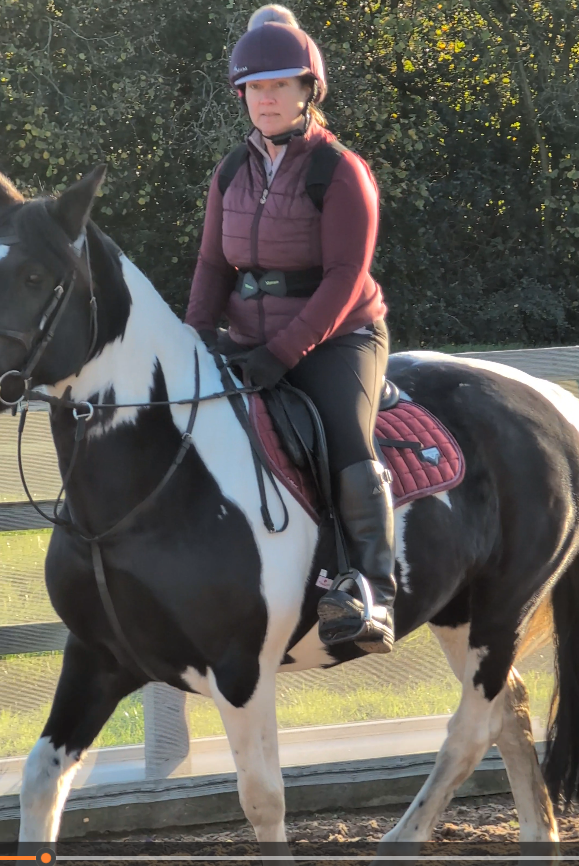
    You may find that you round your shoulders and carry your hands forwards and collapse through the chest and look downwards (think slumping in a chair).

    A photo showing a Posterior Pelvic Tilt in a Horse Rider

    Because of the slumping type of posture, the back is compromised and there is no ‘natural’ curve in the lower back which inhibits the spines’ ability to absorb shock. This can lead to pain over time and even compromise the structure of the spinal discs.

    Posterior Pelvic Tilt

    Does having a non-neutral Pelvic Tilt really matter?

    It really depends on the extent of the tilt and whether you have any issues with riding and/or are suffering from some pain of some sort after riding.

    More often than not, pelvic tilts occur over time from lack of exercise, mobility, and poor posture. Because it is often gradual, we don’t realize the effect it has on us.

    The pelvis should have the mobility to move through the anterior, neutral, and posterior positions. When it is rigid it can cause a number of issues. From increased tension in the shoulders/neck to lower back ache/pain. You may even experience ‘Sciatic Symptoms’, due to the tight glutes applying pressure on the sciatic nerve. This can lead to pain and tingling sensations down one side. As well as a possible weakness in the knee and foot. This will, of course, affect your ability to control your legs.

    Sciatica can only be determined by MRI, otherwise, it is a symptom. Which can typically be treated when the cause is addressed.

    Understanding Your Pelvic Tilt Is Only the First Step

    Identifying whether you have an anterior or posterior pelvic tilt can be helpful, but knowing what your posture is doesn’t automatically tell you how to improve it.

    Many riders search online for a few stretches or strengthening exercises and hope that will solve the problem. Unfortunately, posture is rarely that simple.

    Your pelvic position is influenced by the way your muscles support your body every day, not just when you’re riding. If those movement patterns have developed over months or years, correcting them usually requires more than stretching one muscle or strengthening another.

    The key is following a structured programme that improves mobility where it is limited, restores strength where support is lacking and gradually teaches your body to maintain a more efficient posture without constantly thinking about it.

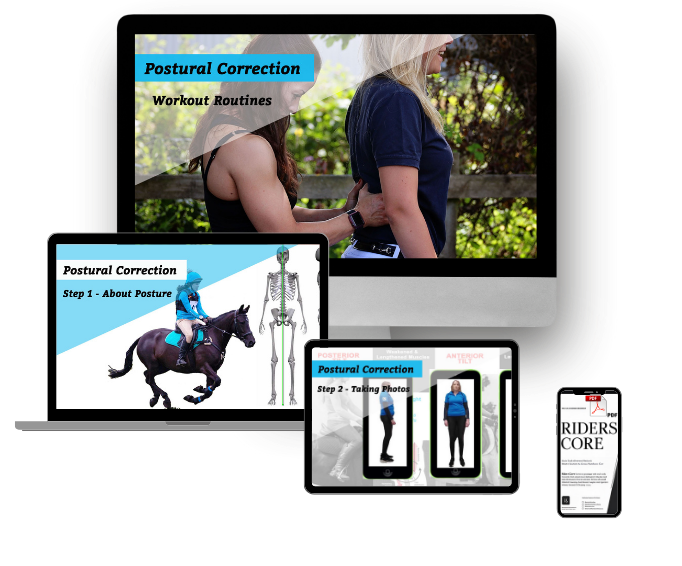
    That’s exactly why we created the RiderCise® Postural Bundle.

    Rather than providing a handful of isolated exercises, the programme includes progressive workouts designed specifically for riders with different postural patterns, including anterior pelvic tilt, posterior pelvic tilt and swayback posture. Each programme helps improve the support, mobility and control your body needs to create lasting changes that transfer into the saddle.

    If you’ve recognised your own posture while reading this article, the Postural Bundle gives you the next logical step.

    Image showing the RiderCise Postural Workout Bundle - For riders who want to improve their pelvic Tilts and riding Posture
    How to Prevent Knee Pain When Riding

    How to Prevent Knee Pain When Riding

    In this article, I will show you the common stretches that can be performed before and after you ride to help prevent knee pain when riding.

    It’s important to note that Riding itself doesn’t cause knee pain, it simply highlights an underlying issue. If you haven’t already, check out my article on the causes of knee pain in horse riders.

    Rider Leg Muscle
    Overview of Causes of Knee Pain in RidersThe most common reason for knee pain in horse riders is due to muscular tension around the quadriceps. The quadriceps tendon runs over the knee cap and attaches just below.

    Tightness in the hamstrings can also cause knee pain because the hamstring tendons run over the back of the knee and attach to the lower leg bones (tibia & fibular).

    Because the tendons run over the knee joint they can cause pressure which makes it feel like there is a problem with the knee itself. Actual knee issues such as arthritis can be officially diagnosed by an MRI or X-Ray.

    When a rider experiences knee pain when riding and/or generally the most common reaction is to limit movement and exercises. This can actually contribute to the pain you are experiencing and over time, make it worse.

    Even if you have a confirmed diagnosis of arthritis in the knees. Not stretching and exercising will contribute to the pain you are experiencing.

    Stretches to Prevent Knee Pain when Riding

    Is it really just 2 stretches? yes! stretching out the quadriceps and hamstrings before and after riding will really help you reduce knee pain when in the saddle. If you can do these stretches daily to, whether you ride or not, then you will experience less and less pain in the knees overall.

    Quadricep Stretch

    There are two versions of the quadriceps stretch. There is a basic stretch for those that really struggle with their range of movement and a more advanced stretch for those that have good mobility.

    Both stretches are highly effective.

    Option 1 – Easier

    Hold for 30 seconds on each leg

    Quad Stretch for horse riders
    • Place a hand on the wall/fence or use a broom to balance yourself.

    • Keep your standing leg soft at the knee (not locked out)

    • Bend the knee behind and grasp the front of your foot (or use a lead rope/band to help you)

    • Gently pull the foot towards your bottom

    • Make sure that your upper body remains as straight as possible

    • Avoid tilting the pelvis

    Option 2 – Harder

    Hold for 30 seconds on each leg

    Quad Stretch Advanced
    • Place the front of your foot on a mounting block, low wall, or bench (about 1meter high)

    • Rest on a broom or stick in front of your body, to help balance yourself.

    • Slowly bend your standing knee so you dip downwards keeping the bent knee pointing downwards

    • Go as low as you can comfortably until you feel the stretch in the front of your bent leg

    • Make sure that your upper body remains as straight as possible

    • Avoid tilting the pelvis

    Hamstring Stretch

    Again there are two versions. An easier one for those that have a limited range of movement in their hip and a stretch for those with greater mobility. If you don’t feel the stretch in the back of your leg, the hamstrings, move back and forth slightly, gently, till you do. Everyone is different so you may just need to ‘adjust’ yourself slightly.

    Option 1 – Easier

    Hold for 30 seconds on each leg

    • Place one foot around 1meter in front of your body
    • Keep the back leg soft at the knee (not locked out)
    • Rest on a broom or stick to the side of your body, to help balance yourself.
    • Bend forward from the hip, keeping your back straight throughout
    • Keep foot flat on the floor or lift the toes to intensify the stretch

    Option 2 – Harder

    Hold for 30 seconds on each leg

    • Place the heel of your foot on a mounting block, low wall or bench

    • Keep the chest high
    • Keep the back leg soft at the knee (not locked out)

    • Rest on a broom or stick to the side of your body, to help balance yourself.

    • Bend forward from the hip, keeping your back straight throughout

    • Keep the leg straight to feel the stretch closer to the knee

    • Bend the knee and bend forward from the hip to feel the stretch closer to your bottom

    The Golden Rule for Horses and their Riders

    The golden rule of horse rider welfare and fitness, as well as horses, is ‘Lengthen, Strengthen, REPEAT. When a horse gets a muscular/tendon injury. They must of course rest first then lengthen the muscle/tendon and strengthen over time. Lengthening can be therapy and/or walking in hand to start and is built up over time. Gradually increasing the time, intensity, and complexity (such as different terrain, up and down hills, pole work, in hand core work). This rehab work is done to ensure that the muscle/tendon can deal with the demand of being a horse and riding/competing, if applicable. 


    For riders, we typically spend the majority of our life sitting, standing, or moving with short strides. This causes the muscles in the legs to become shortened and tight. When muscles become shortened and tight they pull on the tendons that attach to the tibia bone. 

    You can learn more about how muscles can cause knee pain 👉 HERE

    How to Prevent Knee Pain when Riding

    Being active by walking the dog, doing yard duties etc do not use your muscles or joints through their full range. It is important to perform exercises that condition your muscles within their full abilities to prevent issues from arising.

    Whilst stretching these muscles will help to elevate pain/discomfort caused by tight muscle tendons pressing on the knee joint it will take time. To alleviate it quicker you should consider strengthening exercises. This will also help to prevent knee pain when riding, and in general, long term. 

    Processing...