In this article, I will show you the common stretches that can be performed before and after you ride to help prevent knee pain when riding.
It’s important to note that Riding itself doesn’t cause knee pain, it simply highlights an underlying issue. If you haven’t already, check out my article on the causes of knee pain in horse riders.
Overview of Causes of Knee Pain in RidersThe most common reason for knee pain in horse riders is due to muscular tension around the quadriceps. The quadriceps tendon runs over the knee cap and attaches just below.
Tightness in the hamstrings can also cause knee pain because the hamstring tendons run over the back of the knee and attach to the lower leg bones (tibia & fibular).
Because the tendons run over the knee joint they can cause pressure which makes it feel like there is a problem with the knee itself. Actual knee issues such as arthritis can be officially diagnosed by an MRI or X-Ray.
When a rider experiences knee pain when riding and/or generally the most common reaction is to limit movement and exercises. This can actually contribute to the pain you are experiencing and over time, make it worse.
Even if you have a confirmed diagnosis of arthritis in the knees. Not stretching and exercising will contribute to the pain you are experiencing.
Stretches to Prevent Knee Pain when Riding
Is it really just 2 stretches? yes! stretching out the quadriceps and hamstrings before and after riding will really help you reduce knee pain when in the saddle. If you can do these stretches daily to, whether you ride or not, then you will experience less and less pain in the knees overall.
Quadricep Stretch
There are two versions of the quadriceps stretch. There is a basic stretch for those that really struggle with their range of movement and a more advanced stretch for those that have good mobility.
Both stretches are highly effective.
Option 1 – Easier
Hold for 30 seconds on each leg
Place a hand on the wall/fence or use a broom to balance yourself.
Keep your standing leg soft at the knee (not locked out)
Bend the knee behind and grasp the front of your foot (or use a lead rope/band to help you)
Gently pull the foot towards your bottom
Make sure that your upper body remains as straight as possible
Avoid tilting the pelvis
Option 2 – Harder
Hold for 30 seconds on each leg
Place the front of your foot on a mounting block, low wall, or bench (about 1meter high)
Rest on a broom or stick in front of your body, to help balance yourself.
Slowly bend your standing knee so you dip downwards keeping the bent knee pointing downwards
Go as low as you can comfortably until you feel the stretch in the front of your bent leg
Make sure that your upper body remains as straight as possible
Avoid tilting the pelvis
Hamstring Stretch
Again there are two versions. An easier one for those that have a limited range of movement in their hip and a stretch for those with greater mobility. If you don’t feel the stretch in the back of your leg, the hamstrings, move back and forth slightly, gently, till you do. Everyone is different so you may just need to ‘adjust’ yourself slightly.
Option 1 – Easier
Hold for 30 seconds on each leg
Place one foot around 1meter in front of your body
Keep the back leg soft at the knee (not locked out)
Rest on a broom or stick to the side of your body, to help balance yourself.
Bend forward from the hip, keeping your back straight throughout
Keep foot flat on the floor or lift the toes to intensify the stretch
Option 2 – Harder
Hold for 30 seconds on each leg
Place the heel of your foot on a mounting block, low wall or bench
Keep the chest high
Keep the back leg soft at the knee (not locked out)
Rest on a broom or stick to the side of your body, to help balance yourself.
Bend forward from the hip, keeping your back straight throughout
Keep the leg straight to feel the stretch closer to the knee
Bend the knee and bend forward from the hip to feel the stretch closer to your bottom
The Golden Rule for Horses and their Riders
The golden rule of horse rider welfare and fitness, as well as horses, is ‘Lengthen, Strengthen, REPEAT. When a horse gets a muscular/tendon injury. They must of course rest first then lengthen the muscle/tendon and strengthen over time. Lengthening can be therapy and/or walking in hand to start and is built up over time. Gradually increasing the time, intensity, and complexity (such as different terrain, up and down hills, pole work, in hand core work). This rehab work is done to ensure that the muscle/tendon can deal with the demand of being a horse and riding/competing, if applicable.
For riders, we typically spend the majority of our life sitting, standing, or moving with short strides. This causes the muscles in the legs to become shortened and tight. When muscles become shortened and tight they pull on the tendons that attach to the tibia bone.
You can learn more about how muscles can cause knee pain 👉 HERE
How to Prevent Knee Pain when Riding
Being active by walking the dog, doing yard duties etc do not use your muscles or joints through their full range. It is important to perform exercises that condition your muscles within their full abilities to prevent issues from arising.
Whilst stretching these muscles will help to elevate pain/discomfort caused by tight muscle tendons pressing on the knee joint it will take time. To alleviate it quicker you should consider strengthening exercises. This will also help to prevent knee pain when riding, and in general, long term.
Do you suffer from Rider Knee Pain during and/or after time in the saddle? Or perhaps you suffer from knee pain every day and riding makes it worse? In this article, I am going to explain some reasons why you may be suffering and how you can determine the cause and manage the pain.
Causes of Knee Pain
Causes of knee pain include arthritis, strained ligaments, tendonitis, and muscular tightness. You could have any of these that are more noticeable through riding but riding itself doesn’t cause knee pain.
Arthritis
There are 3 types of Arthritis:
Osteoarthritis
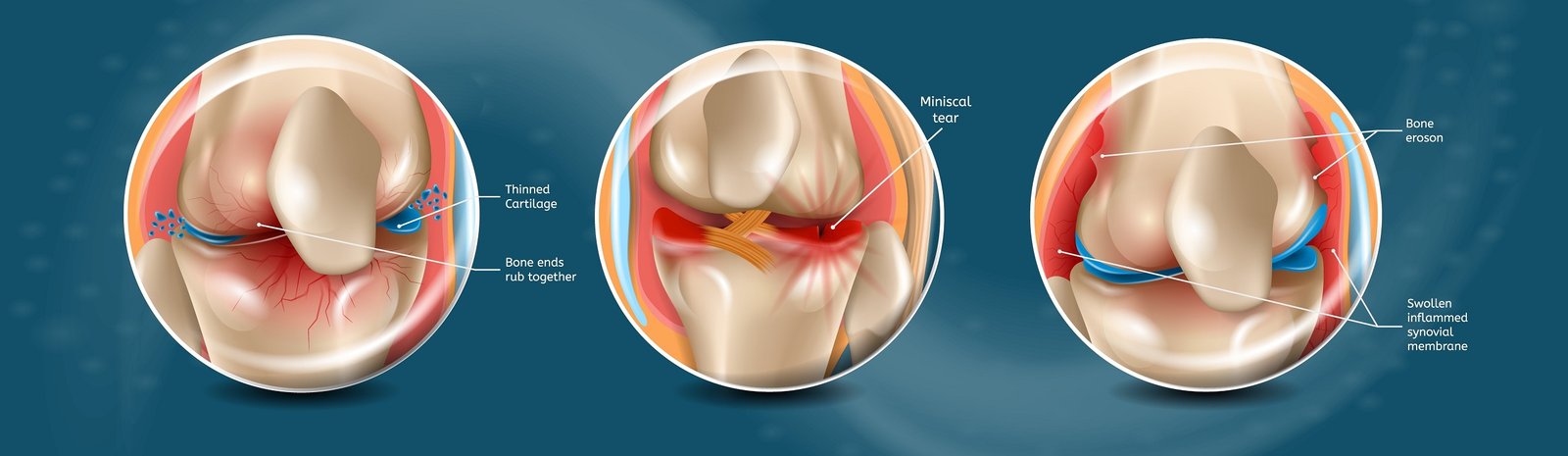
This is the most common of the types. Osteoarthritis wears down the cartilage which is the cushioning between the bones in your knee joint. Without the cartilage, the bones rub together which causes pain, stiffness and restricts movement.
Post-Traumatic Arthritis
Following a trauma like a break or an impact. The cartilage starts to thin and the bones rub together and cause the same symptoms as Osteoarthritis. It may be years after the trauma before you notice.
Rheumatoid Arthritis
This is an autoimmune disease where your unhealthy immune system triggers inflammation in your joints even though there is no need for the body to do so. It believes there is an infection, an injury or a foreign invader when there is not.
When you believe you have arthritis you will visit the doctor who will check if the joint is swollen/inflamed, the range of movement and ask a number of questions. The one key point to remember is.
To diagnose arthritis of the knee officially, you will need an X-Ray and/or MRI.
You cannot diagnose without. It is an assumption.
Meniscus Tear
The meniscus is a piece of connective tissue that sits below the thigh bone (femur) in the knee joint. It acts as a shock absorber and enhances the stability of the joint. They are often caused by sharp sudden changes in direction such as in football or running. The cartlidge also thins as we age.
In a meniscus tear, you will often experience intermittent knee pain which can be sharp. This is because when you bend and straighten the leg the flap of the tear can get caught on the knee bone. Sometimes it will stay caught for a period of time which causes constant pain until the flap returns. Other times the flap just ‘flicks’ as the knee bends and straightens which causes the sharp shooting pain. Not always, but you may also experience swelling.
There are a number of movement tests that can be performed to assess if you have a meniscus tear although these are not reliable as the tests may not move the flap at that given time. Similar to arthritis. The only way to know for sure is to have an X-ray or MRI
Ligament Sprain
Similar to a meniscus tear, you can strain your knee ligaments by sudden changes in directions, twisting of the knee, or over-reaching. A sprain may also be caused by impact.
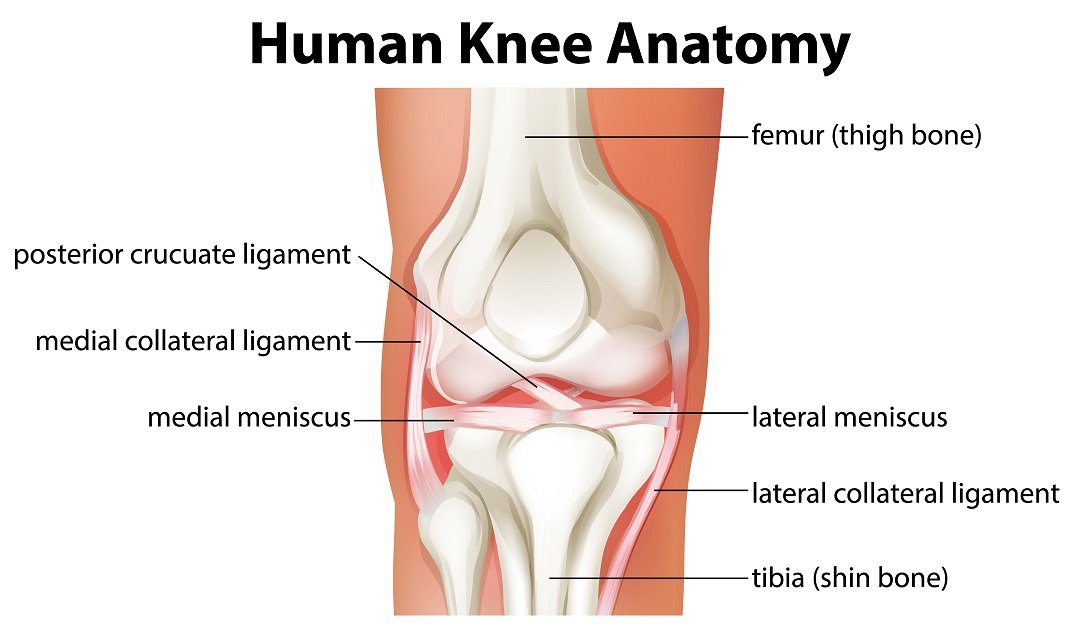
There are 4 ligaments within the knee joint.
Posterior cruciate Ligament (PCL) - Controls backward movement of the shin bone
Anterior Cruciate Ligament (ACL) - Controls rotation and forward movement of the shin bone
Medial Collateral Ligament (MCL) - Provides stability to the inner knee
Lateral Collateral Ligament (LCL) - Provides stability to the outer knee
Tendonitis
When a tendon becomes inflamed it causes swelling, pain, and discomfort. There are many causes of tendonitis such as strain, overuse, injury, or too much exercise. To determine if you have tendonitis a doctor will take a small amount of fluid from the joint to test. Tendonitis can occur anywhere in the body but for the knee to be affected it is normally associated with those that run or cycle long distances and those that play jumping sports such as basketball where the force of hitting the grounds strains the tendon.
Muscular Tightness
The quadriceps tendon (front of thigh) sits over your kneecap and your hamstring (back of thigh) attaches to the back of the knee
When these muscles, either individually or separately, become tight. The muscle shortens pulling the tendon taut across the joint which applies pressure to the knee area. This pressure can make it feel like the issue is within the knee itself. Inflammation doesn’t usually occur from muscular tightness but it is possible. Especially if you have tight muscles and riding is aggravating those tight muscles.
Tightness in the quadriceps and hamstrings can occur in many ways. Such as being inactive, sitting for long periods of time. Repetitive exercises which target these areas but are never stretched/massaged.
Muscular tightness can be assessed formally by Soft Tissue Therapist.
How Do you Find out Why You Have Knee Pain?
As you can see from the possible causes above the knee pain symptoms you may be experiencing are all similar. If you are concerned that it is possibly anything other than muscular tightness then go to your doctor and ask for an X-ray or MRI. There are other methods but these are the most common. Such tests are the only way you will know for sure.
Assuming that the doctor has cleared you, muscular tightness may be the cause of your knee pain. A Sports or Soft Tissue therapist can identify which muscles may be causing you the issues.
Alleviating Knee Pain
In case you have tendonitis then you will need to reduce activities and reduce the inflammation by applying an ice compression. If it doesn’t improve your doctor may discuss steroid injections or surgery. Because of its nature, you will need to be guided by your doctor and work with them until the issue is resolved. Be strong and if you are not getting answers. Ask them to refer you to a specialist.
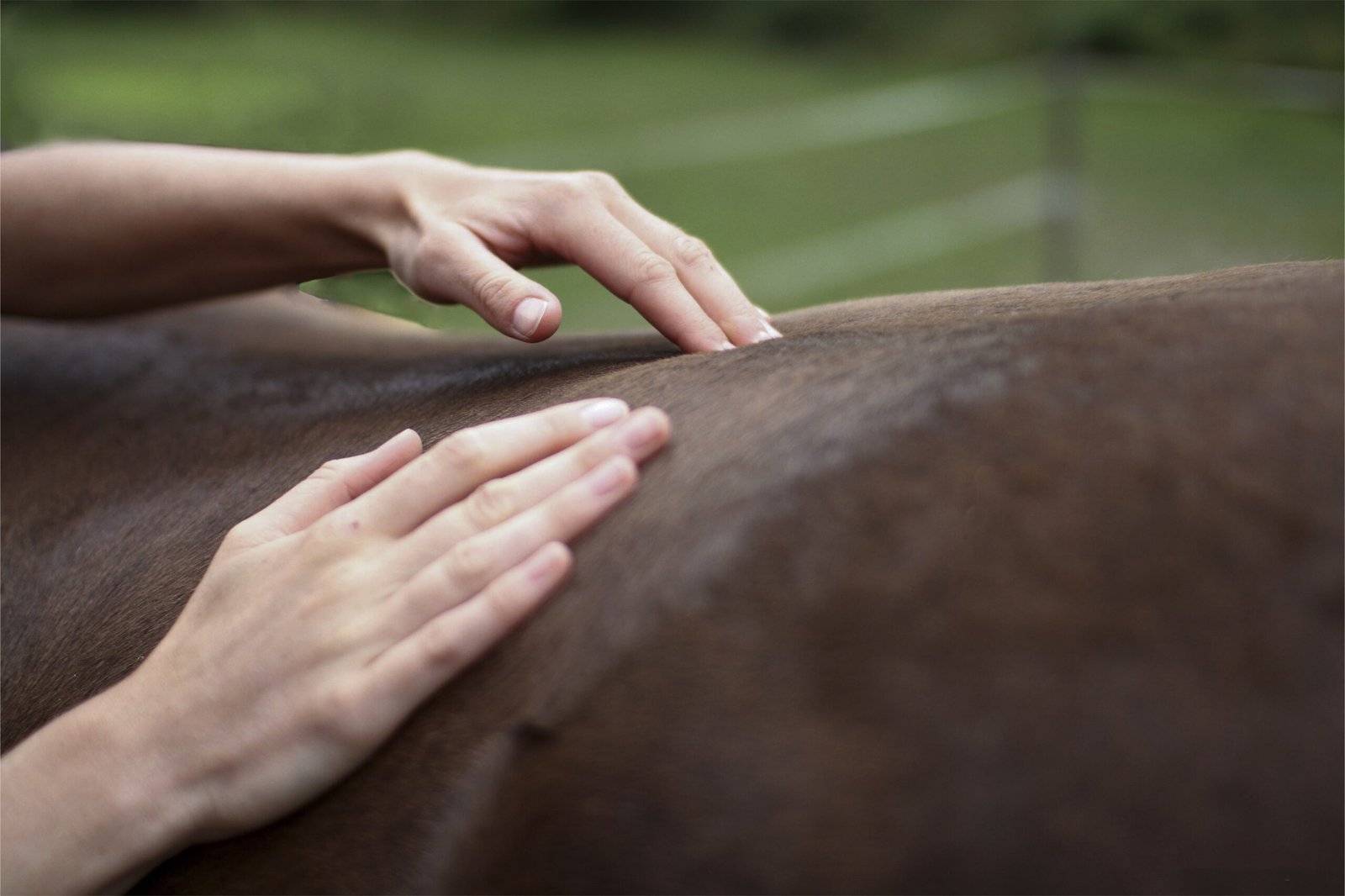
If the cause of your knee pain is arthritis or muscular tightness the best way to manage pain is to actually lengthen the muscles surrounding the knee joint through stretching and massage and improve the strength in your legs. The more you move, the better it will become. Having regular Sports massage or Soft Tissue therapy (not holistic massage) will also improve the tightness in the muscles as well as aid recovery in the muscle fibers.
You can of course take pain relievers and anti-inflammatories but on the understanding that this will simply mask the problems. It will not solve them.
Will Riding Make my Knee Pain Worse?
As mentioned above. Riding doesn’t cause knee pain but it will highlight that there is an underlying issue. Without knowing what that underlying issue is and then dealing with it then yes. Riding will make the knee pain worse.
The truth is many riders don’t know the real reason for their knee pain. It has not formally been diagnosed, rather just ‘labeled’. When you have tight leg muscles and/or arthritis of the knee then not exercising and having regular sports massage only makes it worse over time. Riding will become more and more uncomfortable.
Read our next article to learn how to Prevent Knee Pain when Riding
An equestrian workout is exercise aimed to specifically improve your riding. Using a range of variety to help ‘condition’ the rider’s body for the sport.
An equestrian workout is different from general fitness. Being fit generally means having the ability to perform everyday tasks with ease.
Whilst any form of fitness is beneficial, there is a difference between being fit and fit to ride. For you to become a conditioned rider you must train the muscles riders use, in the variety of ways the muscles operate when in the saddle.
What is an Equestrian Workout - And Why It Matters
Sports like horse riding, at any level and in any discipline, require the rider to have the appropriate strength, mobility, and awareness to meet the demands of the sport.
An equestrian workout is designed specifically to prepare your body for those demands — not just to improve general fitness, but to improve how your body actually functions in the saddle.
Because there is more to riding than simply not being out of breath.
Riding requires coordination, balance, control, and the ability to move your limbs independently while maintaining stability. This is what allows you to communicate clearly and effectively with your horse.
Unfortunately, activities like running, cycling, or yoga — while beneficial for general fitness — do not provide the full stimulus needed to support riding. They don’t train the specific movement patterns, control, or muscle coordination that an equestrian workout develops.
What Does an Equestrian Workout Actually Do?
An equestrian workout focuses on conditioning the muscles and systems your body relies on when you ride.
This includes developing:
Muscular strength
Cardiovascular fitness
Mobility
Coordination and reaction
Muscle recruitment (how muscles work together)
This is what rider conditioning really is — using targeted exercise to improve how your body performs in the saddle, not just how it looks or feels off it.
Why Riders Need Equestrian Workouts Specifically
Whether you are a leisure rider or a competitor, following a structured equestrian workout approach is important — not just for you, but for your horse.
Horse riding requires multiple muscle groups to work together to keep you balanced, stable, and aligned without collapsing or relying on the horse for support.
Without this, riders often compensate by:
Pulling on the reins
Gripping with the knees or thighs
Collapsing during transitions
Losing balance in the saddle
These are not conscious choices — they are physical responses to a body that isn’t fully prepared for the demands of riding.
If your body hasn’t been conditioned correctly, it can also lead to:
Slower progress in your riding
Increased fatigue
Aches and pains after riding
An effective equestrian workout helps prevent this by preparing your body to meet those demands properly.
How Your Body Affects Your Horse
When you are not in control of your body, it directly impacts your horse.
It can lead to:
One-sidedness
Uneven muscle development
Tension or soreness
If you collapse during a transition, your body will instinctively try to stabilise itself. Most riders do this by gripping or using the reins.
This is a natural reaction — but it is not an effective one.
To stabilise correctly, your body needs coordinated activation from multiple muscles, including:
Glute medius
Transversus abdominis
Multifidus
Obliques
Diaphragm
Erector spinae
This level of control doesn’t happen automatically. It requires targeted training — which is exactly what an equestrian workout develops.
Why General Fitness Isn’t Enough
One of the biggest misconceptions is that general fitness translates directly to riding.
It doesn’t.
Running improves cardio but not rider-specific strength
Yoga improves mobility but not control or stability under load
Cycling builds strength but limits mobility and coordination
Each form of exercise has benefits — but none of them fully prepare your body for riding on their own.
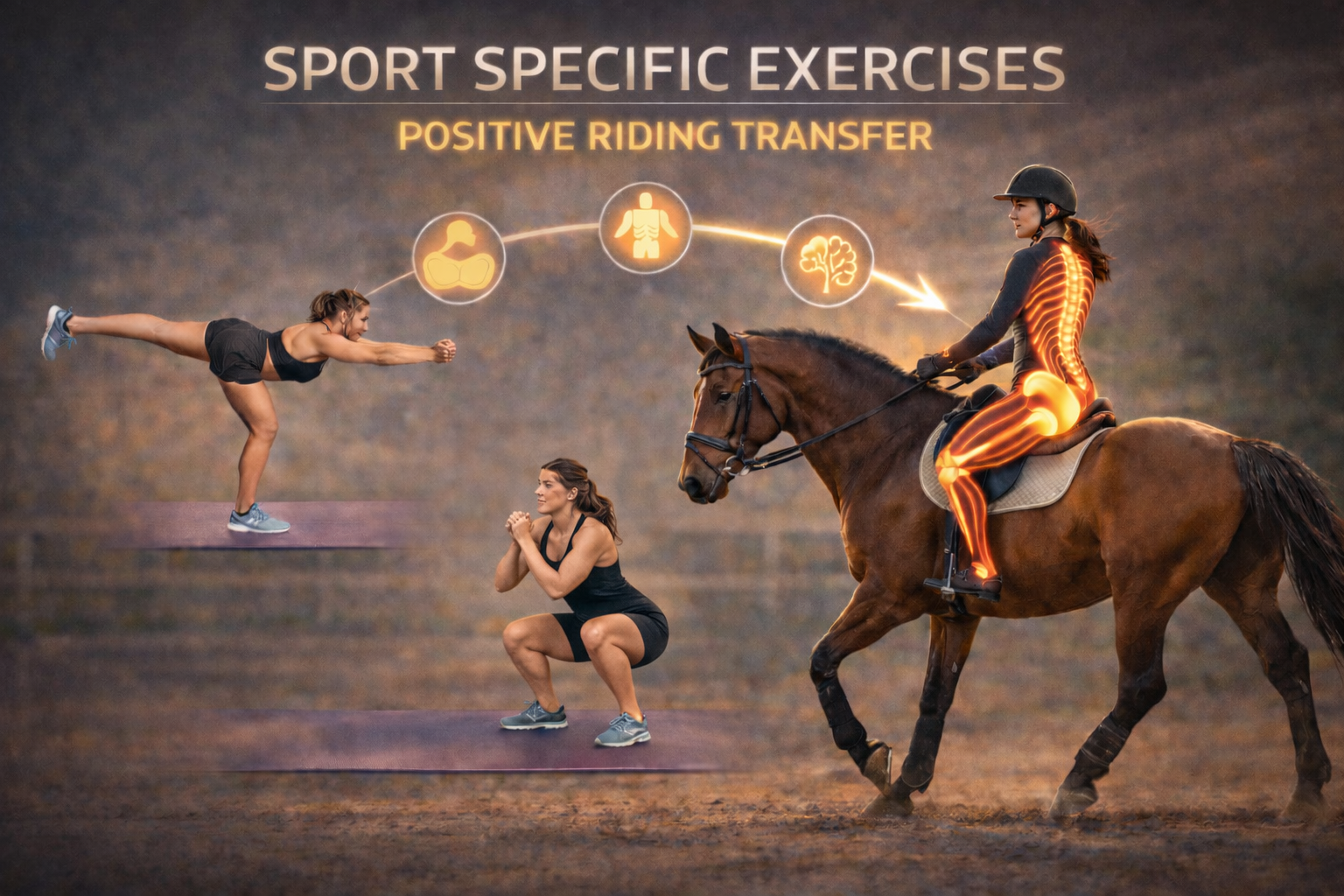
An equestrian workout bridges that gap by combining all the elements you need in a way that directly transfers to the saddle.
How to Build an Effective Equestrian Workout Routine
To become properly conditioned for riding, your training needs to develop:
Strength to maintain posture
Coordination so muscles work together
Cardio fitness to sustain performance
Mobility for independent movement
You can achieve this by combining different types of exercise — for example:
Strength training + mobility work
Cardio + coordination-based training
But the key is not just doing more — it’s doing the right type of work.
That’s what makes an equestrian workout different.
It is structured, specific, and designed to improve how your body performs when you ride.
The Bottom Line
Riding well places a significant demand on your body.
If your body isn’t prepared for that demand, it will compensate — and those compensations are what show up in your riding.
An equestrian workout doesn’t just make you fitter.
It improves your control, your balance, your communication, and ultimately, your partnership with your horse.
Because better riding isn’t just about what you do in the saddle.
It’s about what your body is capable of producing when you’re in it.
Start Understanding Your Body First
If you want to improve your riding, the first step isn’t doing more — it’s understanding what your body is currently doing and why.
✔ What I look for when assessing riders ✔ How your movement patterns affect your riding ✔ Why your body responds the way it does in the saddle
Ready for a Structured Equestrian Workout?
If you’re ready to go beyond awareness and start improving how your body actually performs in the saddle, my rider-specific programs are designed to give you that structure.
These are not generic workouts. They are targeted equestrian workouts built to improve:
✔ Strength ✔ Stability ✔ Coordination ✔ Balance ✔ Control
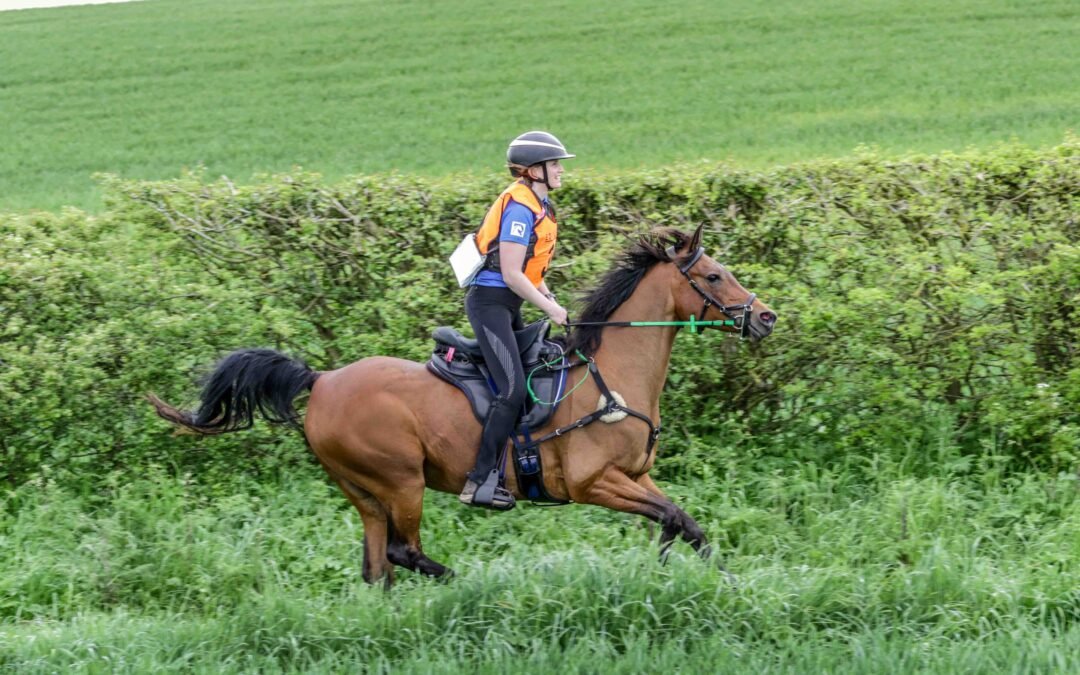
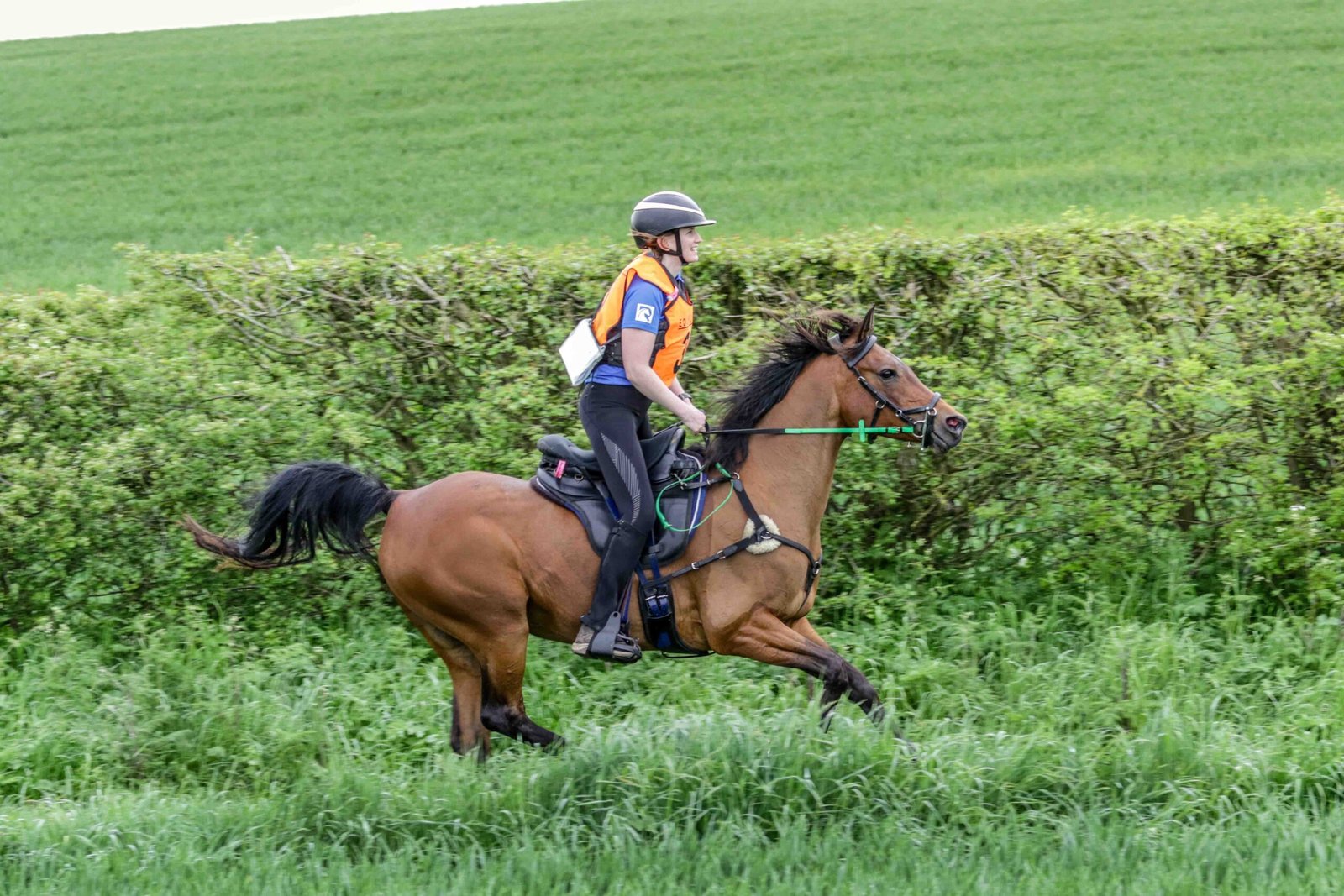
As an endurance rider, I love the freedom of riding over miles of the open countryside whilst developing a unique bond and understanding between horse and rider that is crucial to being successful in this sport.
I also enjoy the diversity of training a top endurance athlete, with lateral arena work, hacking, cross-training, and interval training as part of my regime.
Like many riders, I put 110% into training my horses, ensuring they are in peak condition to perform. My physical training on the other hand had, in the past, always taken a back seat.
The reality is, that we all know how critical endurance rider fitness is. As riders, we must be fit so we stay light and balanced in the saddle to help our horses cover the miles as effortlessly as possible. As horse owners are generally fit, especially when it comes to lifting heavy bags of feed, pushing multiple wheelbarrows, and walking many miles, so we are ride fit, right?
As I’ve learned this couldn’t be further from the truth.
A Distance Athlete from a Young Age
At school alongside competing in endurance, I also competed in long-distance running and marathon canoeing. I have always considered myself ‘fit and athletic’. Despite this, my coach continually commented on my inflexibility and how I struggled with the basic stretches.
This was down to the miles and long hours I rode and the subsequent strength of my muscles. In my 20s now focusing solely on endurance, I started Pilates. I found it incredibly relaxing after a hard day at work and my core definitely felt stronger. However, I still struggled at canter in the arena. Not to collapse through my hip and on the longer distances I didn’t feel I was maintaining my seat as the miles went on.
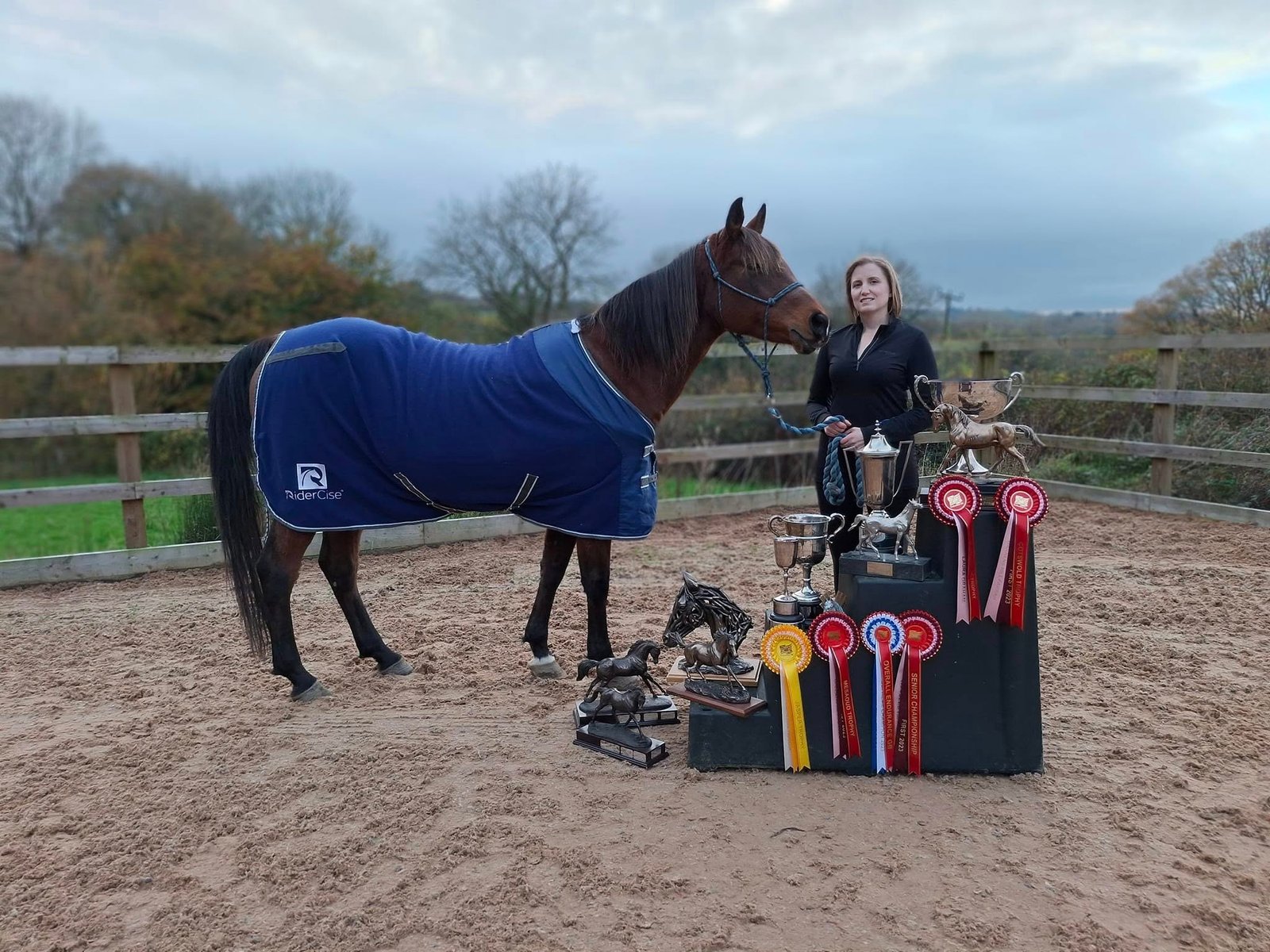
In 2020 I was lucky enough to start working with RiderCise. It is through this partnership with Clare I have learned what endurance rider fitness truly is and what it isn’t.
The Differences I've Learned between General and Endurance Rider Fitness
The most important difference I’ve learned is:
To perform optimally in the saddle. The type of fitness you do must be targeted to the muscles you use when in the saddle.
To have the flexibility and strength (mobility) to maintain your position over the miles requires a mix of strength, HIT, and stretching exercises.
Before I started the RiderCise workouts I couldn’t even sit cross-legged, even as a child. The inflexibility my coach put down to my strong muscles was actually me not using my muscles correctly, resulting in compensation and restrictions.
So whilst I was ‘fit’ before I wasn’t endurance rider fit. After a few months of RiderCise workouts, I could for the first time in my life sit cross-legged, the restriction in my glutes and abductors has gone.
Even more importantly. I now have the strength of seat to use subtle changes to influence my horse. Be that direction, pace, or cadence. Before I relied far too much on my hands and legs and not my seat. It must be a much more pleasurable experience for my horses being ridden by me now.
What I've Learned from Rider Specific Training
It is interesting how we don’t always apply the knowledge we have of horse fitness to endurance rider fitness.
RiderCise has taught me that as with our horses, it is important to taper your workouts before a competition to ensure you aren’t competing with fatigued muscles. Another really important lesson I’ve learned is to ensure your fitness program isn’t detrimental to your riding.
If you push yourself and your muscles too hard in the gym so that you are sore you’re not going to ride well the following day. It isn’t about superhero strength, it’s about training the right muscles at the right time to improve your riding and stamina over the miles.
We also all have weaknesses we need to work on. Any tightness or misalignment in us will influence our horse’s way of going. As they adjust to our asymmetry. This can, in time, result in reduced performance, schooling misunderstandings, and occasionally, lameness.
The RiderCise workouts have helped me to strengthen my weaker muscles, resolve my body compensation and improve my symmetry.
Like many riders, my horses are seen by a veterinary physiotherapist regularly throughout the season. I’d never even thought before RiderCise that I should be paying the same attention to my body! The benefit of a deep tissue treatment to release those restrictions is not only key to ensuring you are working out correctly but also able to ride well.
Endurance Rider Fitness is now part of my Mindset
I’ve also learned that endurance rider fitness is something you have to keep working at. Sadly, unlike horses, we lose our fitness fairly quickly. To be rider fit, especially for endurance, you have to stick at it with regular consistent workouts. They don’t have to be long though, 10-30 minutes five times a week. Having worked with RiderCise since 2020 I can’t believe how much suppler and stronger I am.
The days after an 80km I no longer feel fatigued and sore but ready to ride again. Not being fatigued in the saddle means I’m now able to maintain my mental focus. Not just on our route and the drive to keep going but, I am more aware of how I and my horse is feeling/going. Being able to pick up on any changes early helps us to ‘catch’ them before they become a problem. This is crucial when riding longer distances and/or trickier terrain.
Gaining a true understanding of endurance rider fitness through the RiderCise workouts has been transformational for me as an athlete. Both physically and mentally enabling me to bring my A-game every time I compete be that 30km or 160km.
We all have riding aspirations. Whether that is to simply be able to ride without feeling sore the next day, having the confidence to go to pleasure rides with friends, being the best rider you can be, getting out and about at shows, or competing to the highest level possible.
To many of us, it seems that we can never reach that aspiration. While other riders around you seem to be reaching their dreams, smashing goals, in the limelight, or simply just making progress?
Why do some riders seem to reach their aspirations and others don’t? It’s not the aspirations that are different. It’s the way we view and approach them.
The Difference between Riding Aspirations and Goals
When you look at the meaning definitions it isn’t clear cut but breaking the words down can help give you a clear difference:
GOAL: The object of a person’s ambition or effort; an aim or desired result.
ASPIRATION: A hope or ambition of achieving something.
Similar in that both describe a future state but different in that Goals are objective and measurable such as winning a competition, whereas Aspirations are subjective, unmeasurable, and intangible such as an emotion or feeling.
Using the examples above. Your aspiration may be to be a confident rider or compete to the highest level. You can’t measure confidence. It is personal to you. Only you know when you have achieved it. Competing at the highest level is also subjective to what you consider to be the highest level. Not other riders’ perception of what count’s as a high level. It does not necessarily mean Grand Prix or International.
Perspective
Imagine your tack room is a mess, you set yourself a goal to tidy it.
If you summon the energy to tidy it, you have a clean tack room – for now. But, if you maintain the same sloppy habits that led to the messy tack room then it will soon be a total mess again. You are left chasing the same outcome because you never changed the system behind it. You treated a symptom without addressing the cause.
“If you always do what you always did, you’ll always get what you always got”.
Henry Ford
The implicit assumption behind any goal is this: “Once I reach my goal, then I’ll be happy.” When you reach that singular goal you realise you are not happy. So, you move your focus to your next goal.
Goal: Have the confidence to go to‘A‘ pleasure ride, to go to‘A‘ show, to win ‘A‘ competition. A specific measurable goal with ‘A‘ being singular.
This creates a “yo-yo” effect, much like dieting. Riders work hard for months but as soon as they achieve that goal, or fail, they stop. There is no longer anything to motivate them. This is why many people find themselves reverting to their old habits after accomplishing reaching their goals, or not.
Goals also create an “either-or” conflict: Either you achieve your goal and are successful, or you fail, and you’re a disappointment. Whereas you actually become one step close to your riding aspiration, whether you fail or succeed at that goal.
True long-term thinking is not about any single accomplishment, a goal. It’s about the journey of constant refinement and continuous improvement. Ultimately, it’s your commitment to the approach that will determine your success.
Aspirations: Go on ‘many‘ pleasure rides, to ‘regularly‘ attend shows, to win at ‘various‘ competitions. A future state of being, as in Plural – many times.
Long-Term Approach Gets Results!
As a Rider Performance Coach, I speak with so many riders that are so focused on achieving a particular goal (short term) rather than the aspiration (long term) that they do not realise that achieving that one goal will only affect them positively momentarily. After the rider has achieved that singular goal, then what? All that hard work that you put in just disappears and you return to how you once were? The rider returns to feeling the aches and pains, loses their confidence, stops going to shows, or doesn’t manage to go to the next level.
The difference between riders that win, who seem confident, or have a better seat and position is they are constantly learning, adapting, and taking action to reach that aspiration.
If you are a rider who wants to reach your riding aspiration you must accept that it is a journey. Every goal you reach, whether you fail or succeed is a stepping stone. that will bring you one step closer to your riding aspiration.
Set goals, but understand them as a stepping stone that will bring you one step closer. That singular goal does not make you successful or a failure but it does help you progress to where you want to be.
Rider Fitness Can Help
Feel tempted to learn how RiderCise can help? Read our Reviews on how Rider Fitness is helping them to ‘Be the Rider They WANT to Be‘. Or if you are ready to get started straight away, subscribe today!
I would love to hear your views so do not hesitate to contact us, subscribe to our newsletter for free, or click here to get in contact for any questions or queries you may have. Keep up to date with the latest content by following our Social profiles on Facebook, and Instagram.