
What Is the Mongol Derby?
The Mongol Derby is regarded as one of the toughest equestrian endurance races in the world. Riders spend around ten days crossing the Mongolian steppe, changing horses every 40 kilometres and covering up to 100 miles a day on semi-feral horses. It is physically demanding, mentally exhausting and completely unpredictable. It isn’t simply a horse race; it is an expedition that tests every aspect of your body and mind.
The Decision That Nearly Ended Chloe's Mongol Derby Before It Began
When I first met Chloe in January 2025, the objective was clear. She was due to compete in the Mongol Derby in August that same year.
Like many riders preparing for something of this scale, Chloe assumed much of the preparation would revolve around riding. My view was very different. Long before we worried about horses, I was assessing whether her body would actually be capable of coping with what the Derby would demand of it.
Then, only weeks after we started working together, everything changed.
In February, Chloe suffered a serious fall, dislocating and fracturing her shoulder.
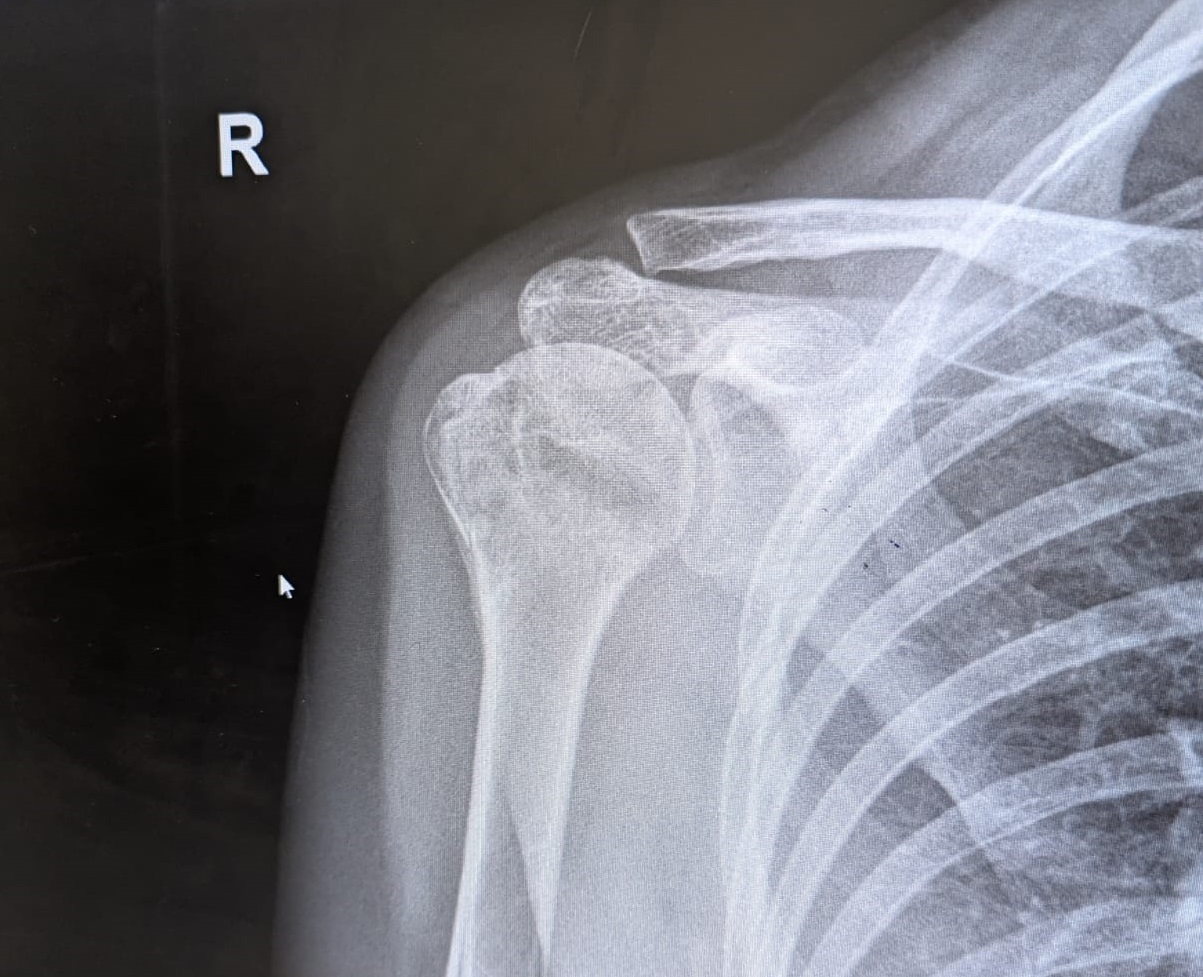
Suddenly, the conversation wasn’t about preparing for Mongolia. It became a question of whether Mongolia was still possible at all.
From a purely physical perspective, I believed I could probably get her there. We had enough time that I could rebuild her shoulder, modify the training and prepare her body well enough for her to complete the Derby.
But completing it was never the standard I wanted us to aim for.
I remember saying to Chloe that whilst I could almost certainly patch her up enough to get her around the course, I wasn’t convinced she would actually enjoy it. When you’re investing close to $19,000 in what is likely to be a once-in-a-lifetime experience, simply surviving ten days isn’t enough. I didn’t want her spending every day managing pain, protecting an injury and counting down the miles until it was over. I wanted her to experience everything the Mongol Derby is supposed to be.
The timing made the decision even more difficult because there was only a short period in which she could defer her place without losing a substantial amount of money. I deliberately raised the conversation early enough that she still had options, then left the decision entirely with her. There was no pressure either way. If she wanted to continue, I would prepare her as best I possibly could. If she chose to postpone, we would rebuild her properly.
After taking some time to think about it, Chloe made what I still believe was one of the best decisions of the entire journey.
She deferred her place until 2026.
That single decision changed everything.
Instead of spending the next few months trying to recover from a serious injury whilst preparing for one of the toughest equestrian events in the world, we suddenly had eighteen months to build the body she actually needed. We were no longer working towards simply getting her to the finish line. We were working towards giving her the best possible chance of enjoying every moment of the experience.
What made the challenge even more interesting was that Chloe wasn’t somebody who enjoyed going to the gym. She’d never really exercised in any structured way before. She loved walking, hiking, travelling and adventure, but strength training was completely outside her comfort zone.
So this wasn’t a story about refining an athlete.
It was the story of building one from the ground up.
Building the Foundations for Mongol Derby Training
Once Chloe had made the decision to defer until 2026, everything changed. We were no longer chasing a deadline. We finally had the time to build her body properly, rather than rushing to make it just good enough to cope.
Before writing a single workout, I spent time understanding where she was starting from.
Chloe wasn’t someone who hated hard work. Quite the opposite. She loved being outdoors, hiking for hours, travelling to remote places and throwing herself into adventures. She had the mindset the Mongol Derby demands. What she didn’t have was a body that had been prepared for it.
She’d never followed a structured strength programme before. The gym wasn’t somewhere she felt comfortable. Squats felt unstable, largely because of her long femurs, and she simply assumed that was how her body worked. She had recurring pain in her right knee, previous elbow injuries and movement patterns that had developed over years without anyone ever really addressing why they existed.
That’s something I see all the time.
People often believe they’re weak because they’re weak.
In reality, they’re usually weak because their body has never learnt to organise movement efficiently.
Relearning How to Move
The first phase of training wasn’t glamorous. There were no heroic workouts, no endless cardio sessions and certainly no attempts to recreate riding in the gym. Instead, we focused on teaching Chloe’s body how to move.
We worked on posture, balance and coordination. We improved hip mobility, began correcting her swayback posture and started teaching her glutes to actually do the job they were designed to do. Every exercise had a purpose. Every progression was earned.
Progress came quickly, but never because we rushed it.
The goal wasn’t to see how much weight she could lift.
The goal was to build a body that would still be functioning after eight or ten hours in the saddle, day after day, on completely unfamiliar horses.
Rehab Without Losing Momentum
As her shoulder gradually healed, we carefully reintroduced upper body training alongside her rehabilitation. Nothing was left to chance. We worked alongside her physiotherapists, although, as a soft tissue therapist with advanced anatomy and physiology, I’d already incorporated rehabilitation exercises appropriate to Chloe’s injury and stage of recovery into her existing programme. By the time she attended physiotherapy, many of the prescribed exercises were considerably more basic than where she had already progressed to, so we simply used them as part of her warm-up before continuing with the programme I’d designed.
As soon as Chloe was signed off by her consultant and we had confirmation that the fracture had healed, the shoulder stopped being the focus.
That might sound surprising, but it’s a principle I feel very strongly about. Once the tissues have healed and medical clearance has been given, continuing to treat an injury as though it’s still injured can actually create bigger problems than the injury itself. People become hyper-aware of the injured area, they subconsciously protect it, and they begin moving differently. Over time, those compensations often become the real problem.
More often than not, it’s actually the opposite side of the body that starts to suffer because it’s been working overtime trying to compensate.
I had no intention of allowing that to happen.
From that point onwards, we stopped treating Chloe as someone recovering from a shoulder injury. Instead, we focused on building a stronger, more capable body as a whole. Every ride became another opportunity to gather information. Where did she grip? What became sore? Which muscles fatigued first? What was her body telling us after spending hours in the saddle? Rather than chasing symptoms, we used that feedback to continually refine the programme.
That philosophy became the foundation of everything we did over the following eighteen months.
We never guessed.
We assessed.
We adapted.
Then we reassessed again.
Every assessment gave us another piece of the puzzle. Every phase built on the one before it. Chloe became stronger, more coordinated, more resilient and increasingly capable of coping with the demands we knew the Mongol Derby would place on her body.
Without really noticing it, she had stopped being someone rebuilding after an accident.
She was becoming an athlete preparing for one of the toughest equestrian endurance events in the world.
Testing Every Aspect of Mongol Derby Preparation
As the months passed, the focus shifted away from simply getting stronger in the gym. Strength alone wasn’t going to prepare Chloe for the Mongol Derby. The real question was whether that strength would transfer when she was spending hour after hour in the saddle, riding completely unfamiliar horses across some of the most unforgiving terrain on earth.
The only way to answer that question was to stop guessing and start testing.
One of the biggest misconceptions people have about preparing for an event like the Mongol Derby is that you simply need to ride more. Of course, saddle time is important, but endlessly riding your own familiar horse doesn’t prepare you for what you’ll experience in Mongolia. There, you’ll be riding a different horse every 40 kilometres. Every horse moves differently. Every horse has a different level of fitness, a different way of carrying itself and a different way of responding to the rider. Your body has to adapt over and over again, often several times a day.
That meant our preparation had to become far more specific.
Throughout the year, we deliberately built a series of test events into Chloe’s programme. None of them were there simply to tick a box. Every single one had a purpose. Each event was an opportunity to stress her body in a controlled environment, gather information and then refine the programme before the next challenge.
The Romania Test
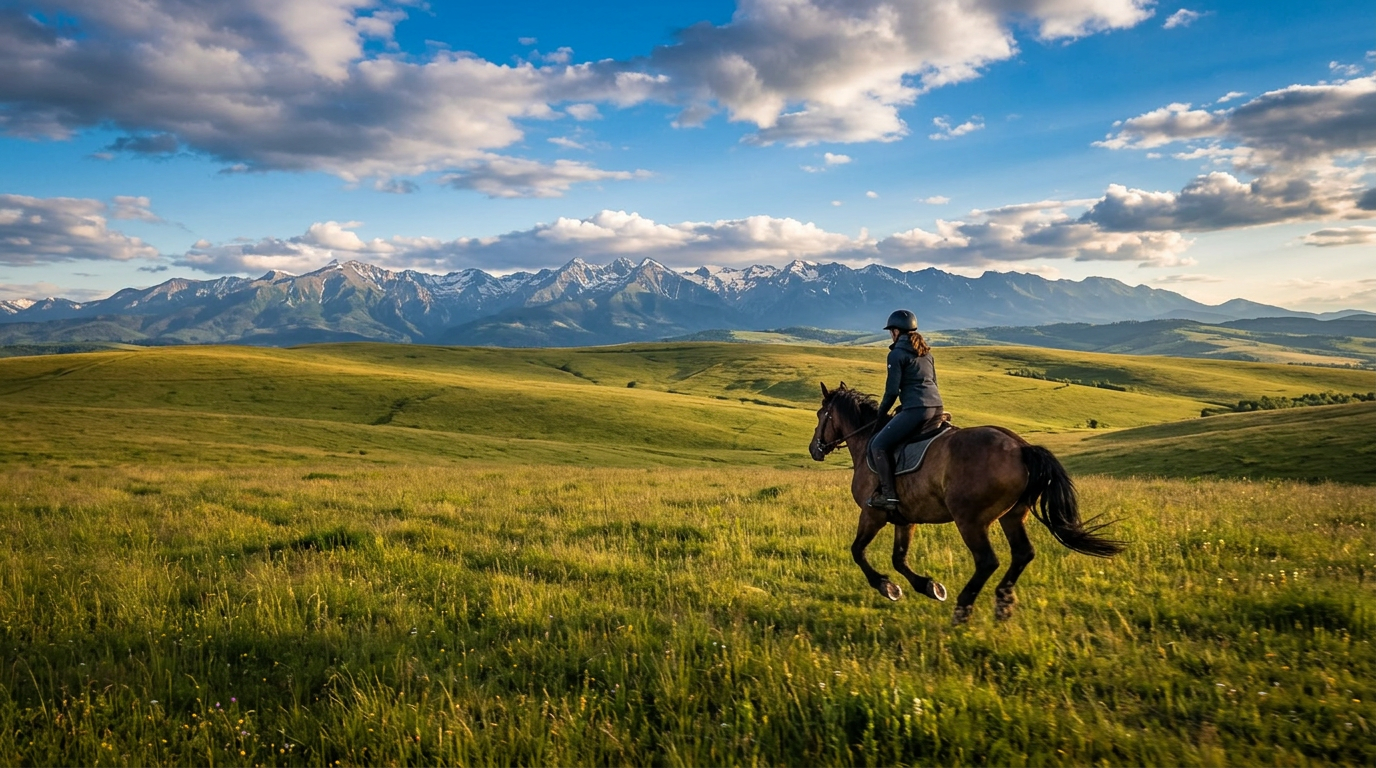
Romania became the first major test.
The feedback was incredibly valuable.
Her overall recovery was excellent. She woke up feeling fresh each morning and felt she could probably have continued for another week. That immediately told me her overall conditioning was moving in the right direction.
But the trip also highlighted exactly where the remaining weaknesses were.
A small change in stirrup position created pain through her ankle and both knees before she realised what was happening. Once she corrected her foot position, the pain disappeared almost entirely. That wasn’t simply a riding lesson; it reinforced just how important efficiency of movement would become over ten consecutive days in Mongolia.
Her back also told us a story.
It wasn’t her lower back that failed first. It was her mid-back. After long days in the saddle, she could feel the muscles simply running out of stamina. Mounting and dismounting repeatedly also exposed a lack of explosive strength, while a handful of unexpected moments on sharp horses highlighted opportunities to improve balance recovery and reaction speed.
None of that was disappointing.
In fact, it was exactly what we wanted.
Because now we knew.
Instead of wondering whether her programme was working, we had clear evidence of what needed to improve next.
So we adjusted it:
→ More work for her posterior chain
→ More endurance through the upper back
→ More glute strength
→ More muscle fatigue sessions
Every decision was based on something her body had already shown us rather than something we assumed might happen.
What the Later Test Events Confirmed
The same process continued through every event that followed.
→ Five-hour riding days
→ Back-to-back riding weekends
→ Different horses
→ Different saddles
→ Different environments
Every experience added another piece to the puzzle.
One event highlighted glute fatigue after spending hours encouraging heavier horses forwards. Another showed that her lower back discomfort wasn’t actually a lower back problem at all. It was simply her glutes reaching the point where they could no longer do their job effectively. Once again, the programme evolved to solve the cause rather than chase the symptom.
The reason Chloe continued to make progress was actually very simple.
She did exactly what I asked her to do.
That level of trust is invaluable as a coach because it allows me to do what I do best: assess, programme, reassess and adapt. Every exercise I prescribe, every progression I make and every change to the programme is based on what I see and what your body tells me. When a client follows that plan consistently, I know exactly what’s working, what isn’t and what needs to change next.
That’s how coaching should work.
Over the years, I’ve noticed a very clear pattern.
The clients who trust the process, complete the programme as prescribed and allow me to coach them almost always achieve exceptional results.
The clients who constantly second-guess the programme, skip exercises, add things I’ve never prescribed, or decide they know better because they’ve seen something on social media create confusion.
Chloe never did that.
She trusted my experience completely. If I changed her programme, she knew there was a reason. If I told her we needed another month building strength before progressing, that’s exactly what we did. If feedback from an event meant changing direction, she embraced it without hesitation.
That trust allowed me to coach her exactly as I intended, and it allowed her body to adapt exactly as it needed to.
In my experience, that relationship between coach and client is one of the biggest predictors of success.
It’s certainly one of the reasons Chloe achieved everything she did.
Ready for the Mongol Derby
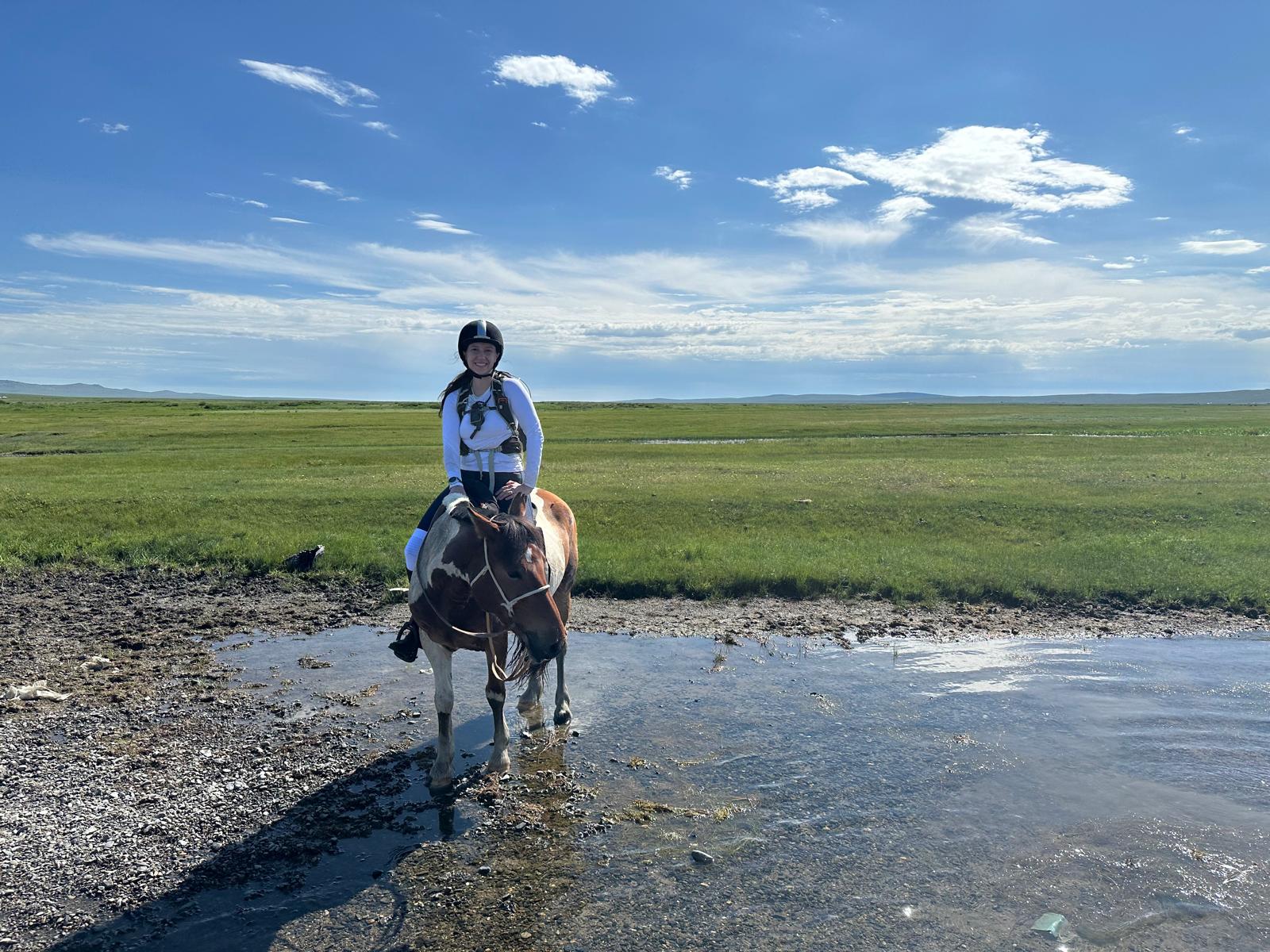
As we moved into the final months before the Derby, the work was largely done.
That might sound surprising, but the final phase of preparing an athlete isn’t about trying to squeeze every last bit of fitness out of them. In fact, doing that is one of the biggest mistakes you can make. The closer you get to an event, the more important recovery becomes. The objective is to arrive on the start line feeling fresh, strong and mentally ready, not physically exhausted from trying to fit in one more workout.
By this point, Chloe had become almost unrecognisable from the person I first met eighteen months earlier.
→ She was stronger
→ She moved better
→ Her posture had changed dramatically
→ Her glutes were doing the job they were supposed to do
→ Her balance, coordination and endurance had all improved beyond what either of us could have imagined at the beginning
But perhaps the biggest difference wasn’t what I saw.
It was what she felt.
She no longer questioned whether her body would cope. She trusted it.
One of the final opportunities to test everything came during her riding camp in Montana. This wasn’t just another holiday; it was effectively the final dress rehearsal before Mongolia. She rode unfamiliar horses, spent long hours in the saddle and exposed her body to exactly the kind of demands we had been preparing for over the previous eighteen months.
The feedback couldn’t have been better:
→ There were no major physical issues.
→ Her longer stirrup position had significantly reduced the knee discomfort we’d identified earlier in the journey.
→ She adapted confidently to different horses.
→ She completed every workout despite travelling.
Most importantly, nothing in the feedback suggested we needed to redesign the programme.
That, as a coach, is one of the most reassuring things you can hear.
Instead of finding problems to fix, all that remained was to taper.
The final weeks became about maintaining movement, reducing fatigue and allowing all of that hard work to consolidate. There was no chasing extra fitness. There was no panic. There were no last-minute changes. The preparation had already been done.
People often think success is built in the final few weeks before a big event.
It isn’t.
It’s built in the hundreds of decisions made over the months and years beforehand.
→ It’s built in choosing to postpone when postponing is the smarter decision.
→ It’s built in turning up for workouts when motivation is low.
→ It’s built in trusting the process when progress feels slow.
→ It’s built in listening to what your body is telling you instead of fighting against it.
And it’s built by having the patience to solve the cause of a problem rather than continually chasing its symptoms.
Watching Chloe prepare for the Mongol Derby has been one of the most rewarding coaching journeys I’ve been part of.
Not because she was already an exceptional athlete.
Not because everything went perfectly.
But because she was willing to start where she was, trust the process completely and keep moving forwards, one step at a time.
As I share this with you now, August 4th 2026. Chloe is in Mongolia. The Derby starts tomorrow!
The outcome of the Derby is almost irrelevant.
Of course I want her to complete it, and I believe she has given herself the best possible opportunity to do exactly that.
But the greatest success has already happened.
Eighteen months ago, she was recovering from a fractured shoulder, wondering whether this dream was slipping away.
She isn’t travelling to Mongolia hoping her body survives. She’s travelling knowing her body has been prepared for the challenge ahead.
For me, that’s what coaching is really about.
It isn’t about creating perfect athletes.
It’s about helping ordinary people achieve extraordinary things.
Chloe, thank you for trusting me with your journey. It has been an absolute privilege to coach you, and I couldn’t be prouder of what you’ve achieved already.
Now go and enjoy every single mile.
Follow Chloe's Mongol Derby Journey
The Mongol Derby runs a LIVE Tracking system where you can track all of the riders, go to the main site: https://equestrianists.com/mongol-derby
The LIVE Tracking should be Live from Wednesday 5th August 2026.
Thinking of Doing the Mongol Derby?
If the Mongol Derby is on your bucket list, don’t wait until six months before the start line to think about your preparation.
The body you need for Mongolia isn’t built in a few weeks. It’s built through structured, progressive training designed specifically for you.
That’s why I only work with riders who have a minimum of 12 months before the Derby. It gives us the time to assess properly, build the right foundations, progressively develop the strength, endurance and resilience your body needs, and arrive in Mongolia knowing you’ve prepared as thoroughly as possible.
My bespoke Mongol Derby coaching starts from £4,200 for a 12-month programme.
If you’re planning a future Mongol Derby and you’re serious about giving yourself the best possible chance of enjoying the experience—not just surviving it—I would love to hear from you.
📩 Send me a message to discuss whether my coaching is the right fit for your Mongol Derby journey.