
Why Your Horse Riding Position Feels Like It Won’t Stay
If your position won’t stay in the saddle, it rarely feels dramatic. It’s often subtle, inconsistent, and difficult to explain.
You can find your position, correct it, sit taller, steady your hands, and organise your body into what you know it should look like. For a moment, everything feels right. But then it begins to slip. Not completely, but just enough to notice. Your balance shifts, your body tightens, and something no longer feels as stable as it did seconds before.
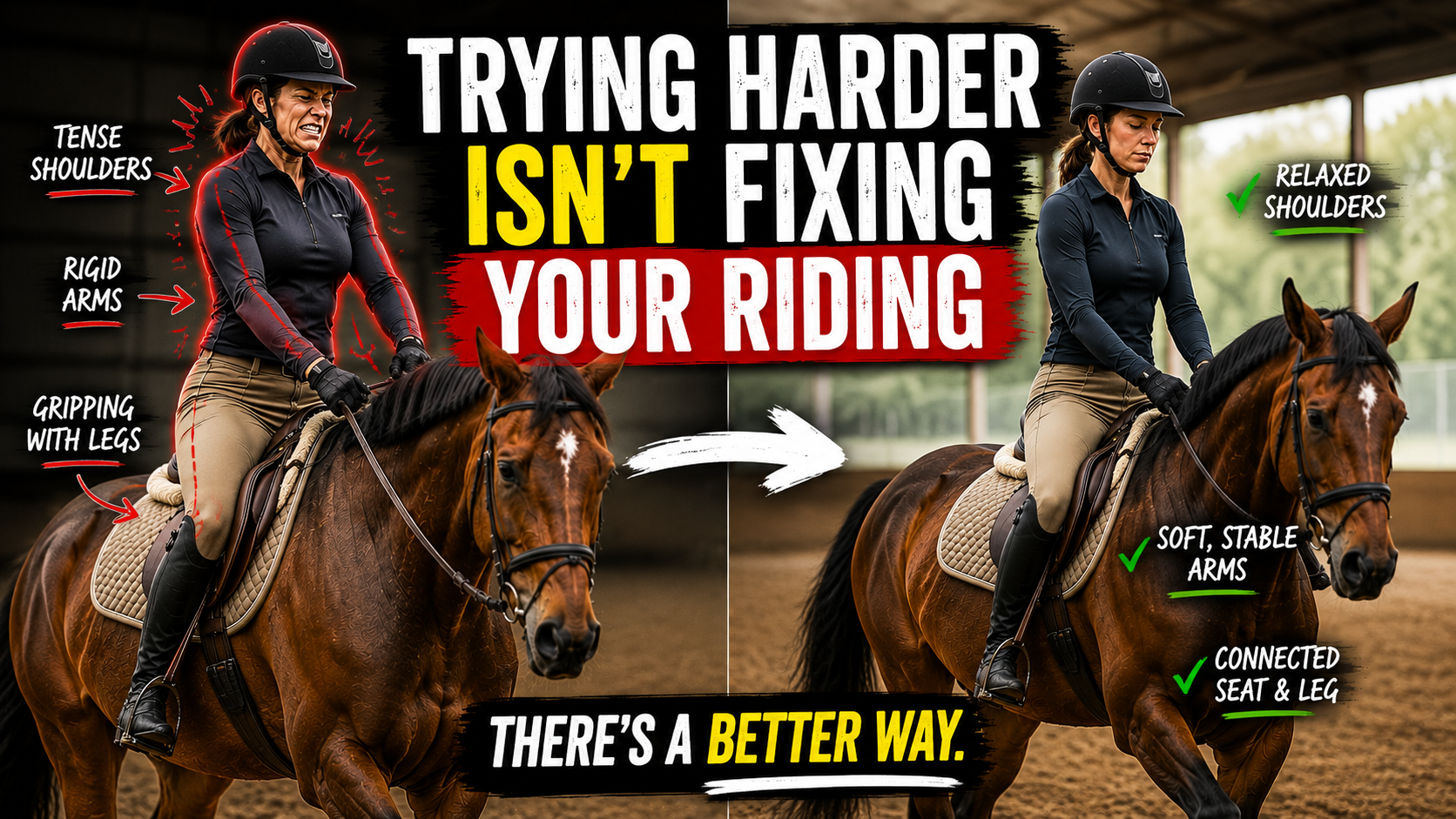
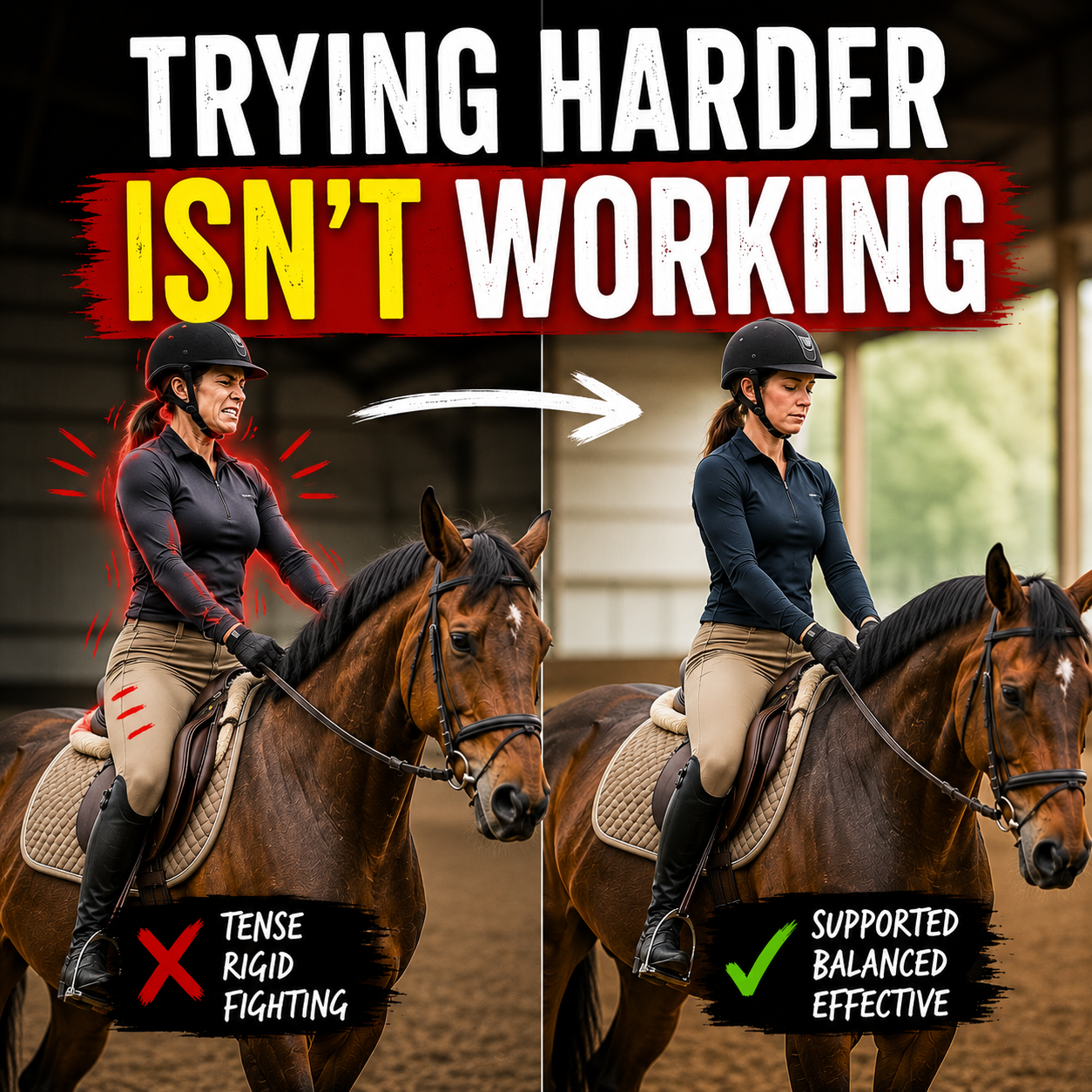
Why Trying Harder Doesn’t Improve Your Horse Riding Position
This is where frustration starts to build, because it doesn’t make sense. You know what you’re trying to achieve. You’ve been given the instructions, and you’re actively trying to apply them. Yet your body won’t maintain it consistently. It feels like something you should be able to control, but can’t.
Most riders respond to this by assuming they need to do more:
- More focus
- More effort
- More correction
- More horse riding position exercises
The logic seems sound. If the position isn’t staying, then strengthening it or practising it more should solve the problem. So they try to hold the position for longer, think more about what their body is doing, and apply more effort to keep everything where it should be.
The Problem With How Most Riders Approach Horse Riding Position
The problem is, this approach is built on the assumption that your position is something you can simply hold in place. It treats the visible outcome as the starting point, rather than the result of something deeper. And that’s where things begin to break down.
Your riding position is not something you create in the moment. It is something your body produces based on the movement patterns, stability, and coordination it already has available. When you sit in the saddle, you are not building your position from scratch. You are expressing what your body currently knows how to do.
Why Your Horse Riding Position Changes When the Demand Increases
This is why your position won’t stay, regardless of how much you think about it.
👉 Your body cannot maintain a position it does not have the capacity to support.
It may be able to find it briefly, especially when you are focused and the environment is controlled, but it cannot sustain it when the demand increases.
As soon as that demand changes — whether through:
- Transitions
- Balance adjustments
- Time in the saddle
- Subtle shifts in your horse’s movement
— your nervous system steps in.
It doesn’t choose what you are consciously trying to do.
👉 It chooses what feels most stable and reliable based on your existing patterns.
Why Your Body Defaults to Familiar Movement Patterns
That is why your body defaults. Not randomly, and not because you are doing something wrong, but because it is selecting the most familiar and supported option available to it.
This is when you start to feel:
- The grip through your thighs
- The tension in your shoulders
- The collapse through one side
- The movement in your hands
These are not mistakes in the way most riders think of them.
👉 They are compensations your body is using to create stability.
Why Altering Your Horse Riding Position in the Saddle Doesn’t Make It Stay
This is also why many approaches riders use fail to deliver the results riders expect.
They often:
- Focus on the position itself
- Encourage you to replicate or hold a shape
- Ignore the system that creates it
Rather than developing the underlying support that allows that shape to exist consistently.
Without that support, the position will always be temporary.
The more you try to force it, the more your body compensates.
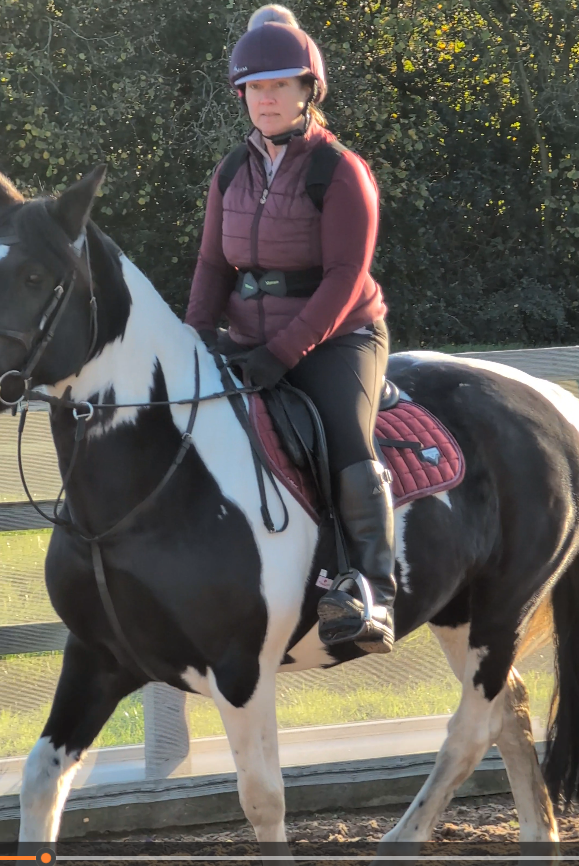
👉 Effort does not create stability if the system underneath cannot support it.
Instead, it increases tension and reinforces the very patterns you are trying to change.
This is why progress can feel:
- Inconsistent
- Frustrating
- Or completely stalled
Even when you’re doing all the “right” things.
Why Your Horse Riding Position Feels Inconsistent — Even When You Know What to Do
When you begin to understand this, the problem starts to make sense.
Your position isn’t failing because you’re not trying hard enough.
It’s not disappearing because you’re forgetting what to do.
👉 It’s changing because your body is responding to what it can currently manage.
That shift in understanding is important, because it changes the direction of improvement.
Instead of focusing on holding your position in the saddle, you start to look at:
- What is enabling it
- What is limiting it
You move away from trying to control the outcome and begin to develop the input.
What Actually Needs to Change for Your Horse Riding Position to Stay
This is where the right approach becomes effective.
Not as a way to force your body into a position…
…but as a way to build:
- Strength
- Coordination
- Control
👉 So your position can stay without effort.
When your body has the capacity to support the position, it no longer needs to be held in place.
It becomes your default.
How Horse Riding Position Exercises Should Support Your Position (Not Force It)
If your position has never felt consistent, it doesn’t mean you are behind or that you are missing something obvious.
👉 It means your body is working exactly as it has been conditioned to.
Using the strategies it trusts most.
And those strategies can be changed — but only when you understand what is actually driving them.
Why Your Horse Riding Position Will Only Stay When Your Body Can Support It
If your position has never felt consistent, it doesn’t mean you are behind or that you are missing something obvious.
👉 It means your body is working exactly as it has been conditioned to, using the strategies it trusts most.
And those strategies can be changed — but only when you understand what is actually driving them.
Watch the Supporting Video
Watch the supporting RiderCise® YouTube video for this article

Discover the Rider Core Mini Course
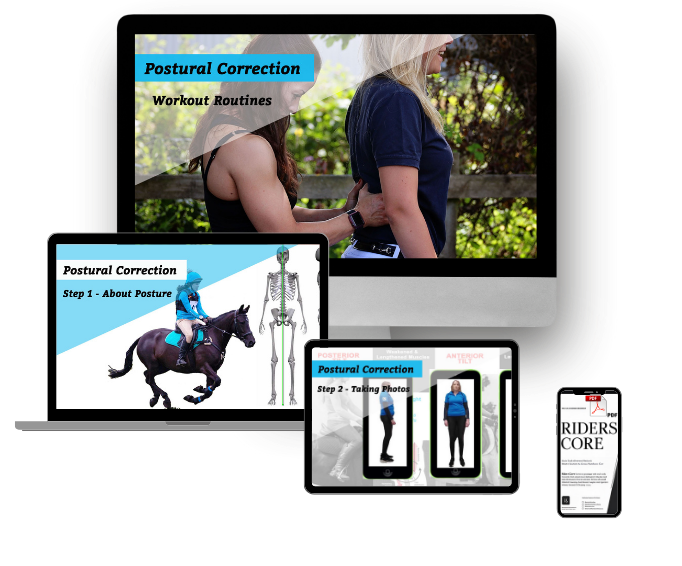
The Rider Core Mini Course helps you understand what your body is doing before you begin trying to correct or strengthen it, giving you a clearer foundation for choosing the right horse riding exercise and improving the way your body supports you while riding.
👉 Join my mailing list and access the How I Assess Riders video, where I break down exactly what I look for and how these patterns show up before they ever appear in the saddle.
Because once you understand the cause…you stop trying to fix the symptom.
And that’s when real progress begins.
If you’re already on my mailing list and would like it resent, email me at clare@ridercise.co.uk and I’ll send it over.