
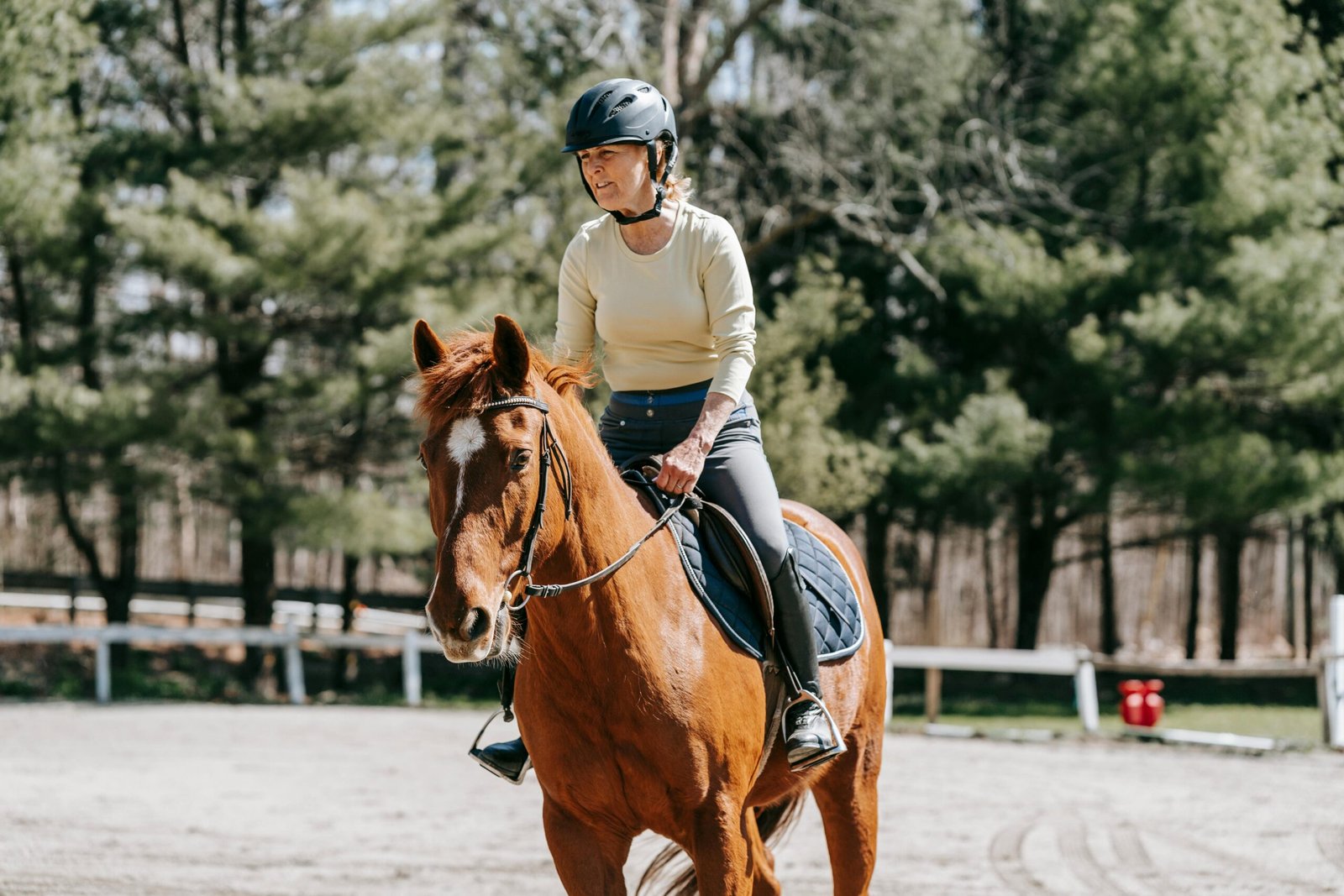
When a Horse Rider feels tense, uneven, unstable, or physically exhausted after riding, the immediate assumption is usually failure.
“I should be stronger.”
“I should be fitter.”
“I should be able to hold this by now.”
But what if your body isn’t failing at all?
What if it’s responding — intelligently and predictably — to everything it has experienced so far?
What if it’s responding — intelligently and predictably — to everything it has experienced so far?
Every Horse Rider carries history into the saddle. Not just riding history, but physical and emotional history.
- Old injuries that were never fully resolved
- Long hours sitting at a desk
- Protective tension after a fall
- Subtle instability in transitions
- Stress carried through the shoulders from life outside the yard
None of that disappears when you mount your horse.
The body does not reset when you pick up the reins. It organises itself according to what feels safest and most stable in that moment.
When something feels uncertain, the nervous system makes adjustments:
- It tightens
- It braces
- It redistributes effort
- It creates control where it perceives instability
That is not failure.
That is response.
Understanding that distinction changes everything for a Horse Rider. Because when you believe your body is failing, you fight it. When you understand your body is responding, you begin to work with it instead.
A Horse Rider’s Body Is Designed for Stability, Not Aesthetics
The primary job of the body is safety.
Not elegance.
Not symmetry.
Not textbook posture.
If at any point a Horse Rider experiences instability — even briefly — the body adapts.
- A small loss of balance in canter
- A tense moment in sitting trot
- A horse that spooks unpredictably
- A landing after a jump that felt heavier than expected
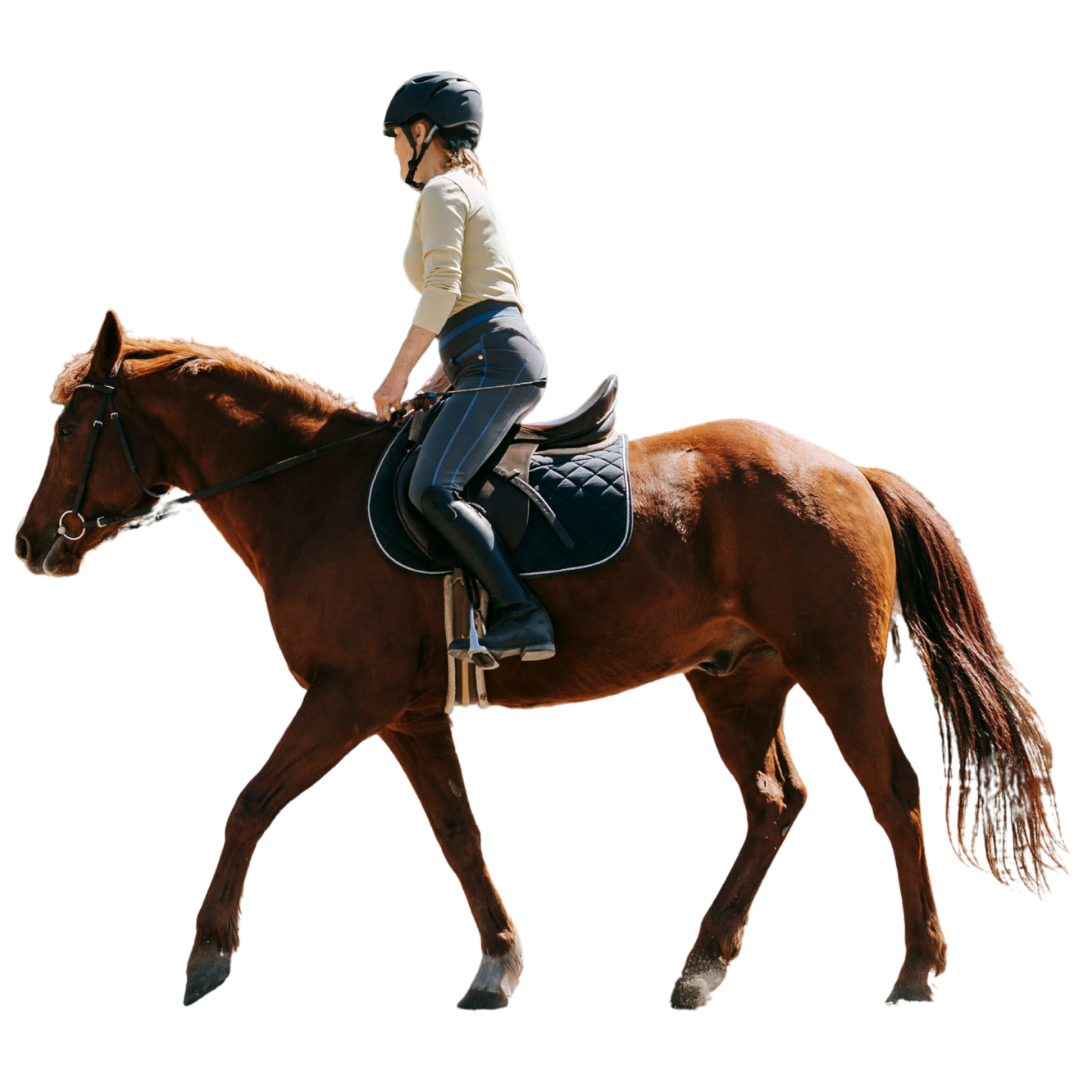
Each of these experiences teaches the nervous system something.
It teaches the body how to prevent that instability next time.
For one Horse Rider, that might mean tightening through the shoulders. For another, it might mean gripping with the knees. For another, it might mean collapsing slightly to reduce muscular demand.
These adjustments are not conscious choices. They are rapid protective strategies.
Over time, those strategies become habits.
- A Horse Rider who grips is not weak
- A Horse Rider who collapses through one side is not careless
- A Horse Rider who struggles to maintain a consistent position is not incapable
The body is simply prioritising stability over refinement.
The difficulty is that what once helped the Horse Rider feel secure can later restrict fluidity, coordination, and endurance. The protective strategy remains long after the original instability has passed.
Adaptation Is Intelligence, Not Dysfunction
Adaptation is often mistaken for dysfunction.
If a Horse Rider has ever experienced discomfort in one hip, the body may subtly shift weight away from that side. If a Horse Rider works long hours seated, the hips and thoracic spine adapt to that posture. If a Horse Rider rides a forward or reactive horse, the nervous system may remain slightly heightened in anticipation.
These patterns are not errors.
They are intelligent responses to demand.
- When a Horse Rider is told to “relax,” but their nervous system still perceives instability, relaxation feels unsafe.
- When a Horse Rider is told to “sit taller,” but the body lacks endurance to maintain it, upright posture feels exhausting.
- When a Horse Rider is asked to soften their hands, but tension exists further up the kinetic chain, the instruction cannot sustain itself.
The problem is not that the body adapted. The problem is that adaptation became the default.
The nervous system always chooses safety over instruction.
This is why so many Horse Riders feel they understand what they are being told, yet cannot hold it consistently. The body is not resisting the instruction. It is protecting itself.
Why Trying Harder Often Makes It Worse for a Horse Rider
The natural reaction to difficulty is effort.
A Horse Rider:
- Concentrates harder
- Engages more muscles
- Tries to control more deliberately
For a few strides, it appears to work.
The position improves.
The outline sharpens.
The corrections stick.
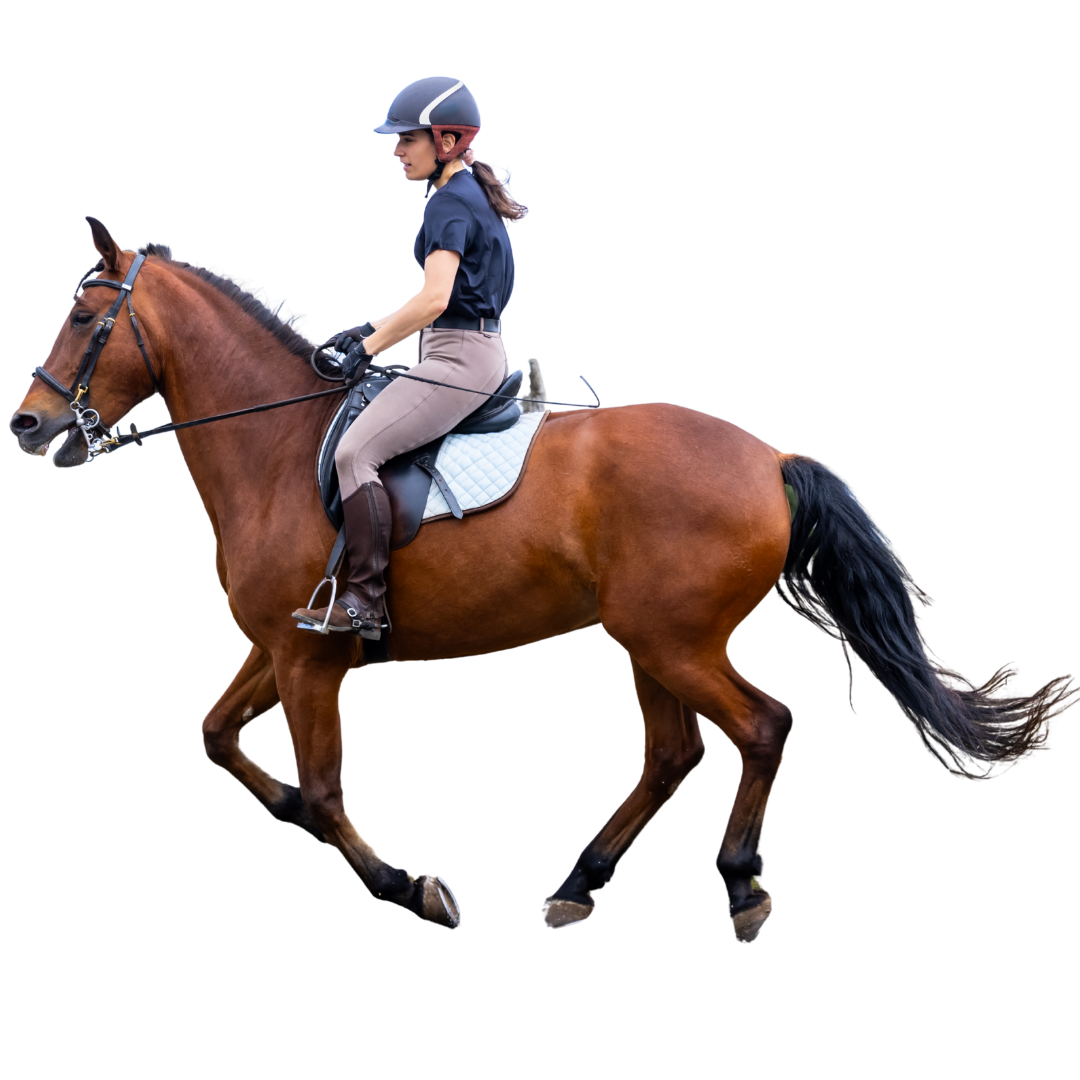
Then the old pattern returns.
Not because the Horse Rider lacks discipline.
Because effort layered on top of protection reinforces tension.
If the body believes it must brace to remain stable, asking it to relax without increasing stability feels risky. If the body believes gripping prevents imbalance, asking it to release without addressing underlying control feels unsafe.
Trying harder does not override the nervous system. It amplifies it.
This is why a Horse Rider can feel increasingly fatigued despite improving fitness:
- Compensatory muscles work overtime
- Smaller stabilisers fail to contribute effectively
- Larger muscles dominate to maintain control
The result is exhaustion without elegance.
The Horse Rider experiences this as frustration.
The body experiences it as necessary.
The Difference Between Failure and Response in a Horse Rider
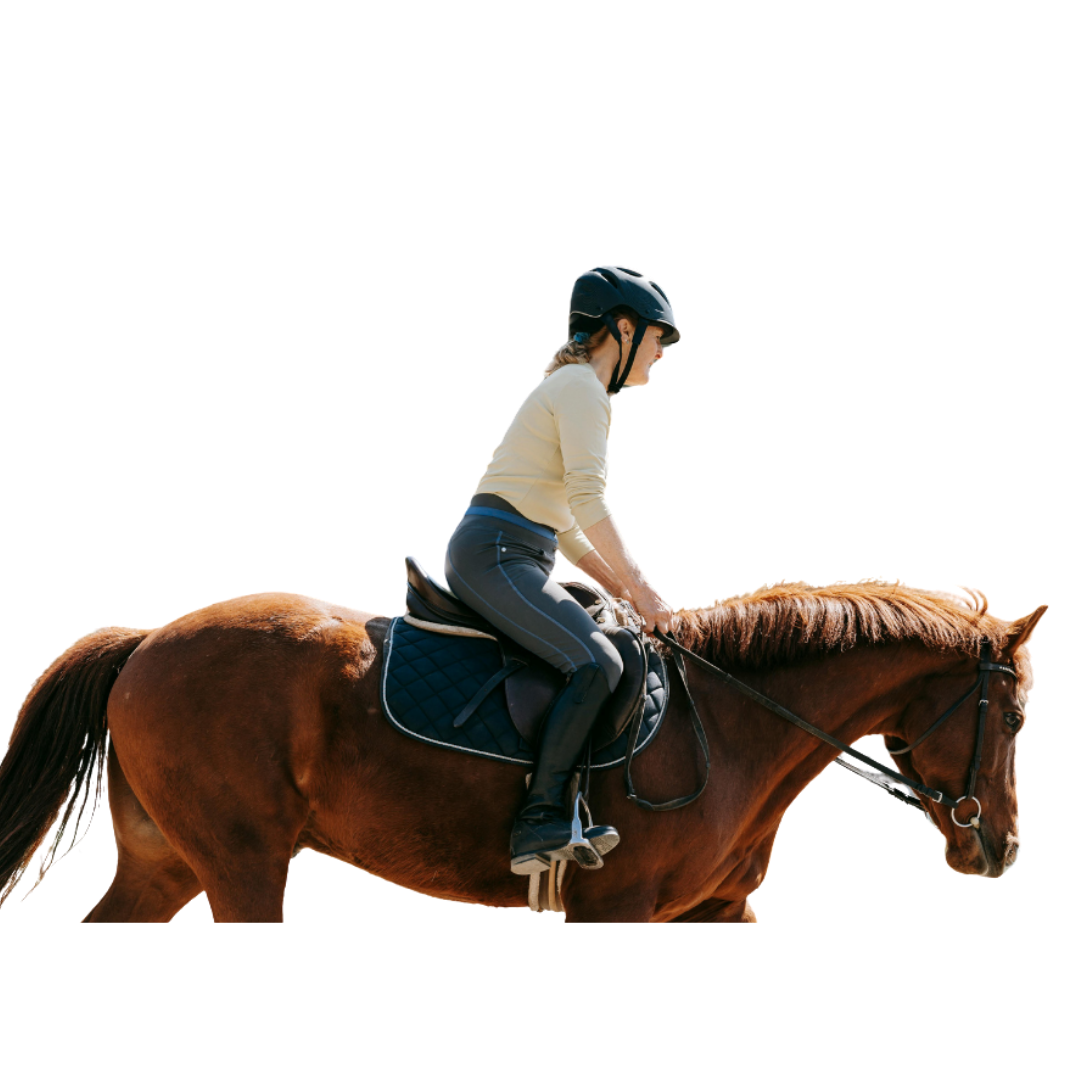
Failure suggests inability.
Response suggests logic.
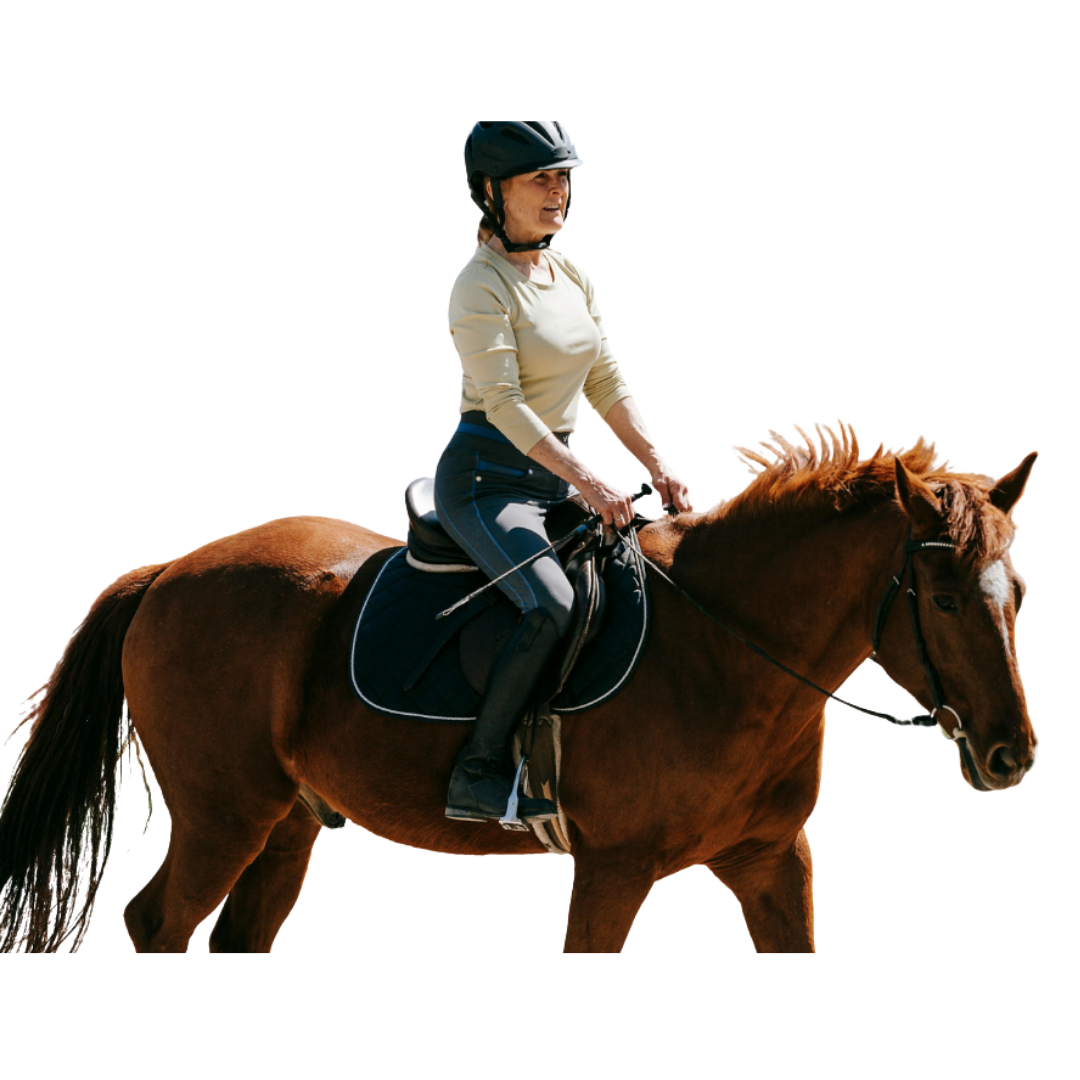
When a Horse Rider collapses slightly through one side, the body may be offloading tension from a previously irritated joint. When a Horse Rider lifts their shoulders during transitions, the body may be preparing for unpredictability. When a Horse Rider feels uneven in the reins, the imbalance may originate in pelvic stability rather than hand position.
These are not random behaviours.
They are organised adaptations.
The body constantly redistributes effort to solve perceived problems:
- If one area lacks stability, another compensates
- If coordination is inconsistent, tension increases to create control
- If balance feels uncertain, the body stiffens to reduce movement variability
The Horse Rider interprets this as a flaw.
The body interprets it as survival.
Once a Horse Rider understands this, the internal dialogue changes.
Instead of “Why can’t I do this?” the question becomes:
👉 “What is my body protecting me from?”
That question shifts the entire approach to improvement.
What Changes When a Horse Rider Stops Assuming Failure
When a Horse Rider recognises that their body is responding rather than failing, something subtle but powerful happens:
- Blame reduces
- Curiosity increases
Instead of suppressing tension, the Horse Rider investigates it. Instead of forcing posture, they examine stability. Instead of chasing perfection, they build capacity.
This is where meaningful progress begins.
The body does not need to be forced into better position. It needs to feel secure enough to reorganise.
- Stability must precede softness
- Support must precede strength
- Regulation must precede refinement
As those foundations improve, visible riding changes begin to occur almost quietly:
- Balance becomes less dramatic
- Transitions feel smoother
- Endurance improves without excessive fatigue
The Horse Rider no longer feels as though they are fighting themselves.
Riding becomes quieter.
And that quietness is often the clearest sign that the body no longer feels under threat.
A Horse Rider Improves by Working With the Body, Not Against It
True improvement does not begin with correction.
It begins with understanding.
When a Horse Rider works with their body rather than against it:
- Adaptation becomes information instead of limitation
- Tension becomes feedback instead of frustration
- Imbalance becomes a signal rather than a flaw
The body is not the enemy of progress.
It is the mechanism through which progress happens.
Your body is not failing you.
It is responding to everything it has learned so far.
But understanding that idea is only the starting point.
If your body is responding rather than failing, the real question becomes:
- Where are you bracing when the pace increases?
- Where do you collapse when fatigue sets in?
- Where does tension rise before you consciously notice it?
Those patterns are not random.
They are organised responses.
And until you can see them clearly, you’ll keep trying to fix symptoms rather than causes.
That’s exactly why I created “How I Assess Rider Movement — and What It Shows Me.”
It gives you insight into the specific movements I use to assess a Horse Rider, and what those patterns reveal about how your body is organising itself in the saddle.
If you’d like that insight, sign up to the RiderCise newsletter using below and I’ll send it straight to your inbox.
If you’re already on my mailing list and would like it resent, email me at clare@ridercise.co.uk and I’ll send it over.
Understand first. Then build properly.